

Glacier Bear (Blue Bear):
A rare, bluish-gray color phase found in parts of Alaska.
Kermode Bear (Spirit Bear): A subspecies (Ursus
americanus kermodei) found in coastal British Columbia.
About 10–20% of this
subspecies are white due to a recessive gene, but they are genetically American Black Bears.
3. The Brown Bear (A Species with Subspecies)
Scientific Name:
Ursus arctos
Color/Appearance: Varies widely from near-white or blonde to brown and dark brown.
Grizzly Bear:
This is a subspecies (Ursus arctos horribilis) of the Brown Bear found inland in North America.
They are typically smaller than coastal brown bears, and their fur often has white-tipped hairs, giving them a "grizzled" appearance.
Kodiak Bear: Another subspecies
Ursus arctos middendorffi) found only on the islands of the Kodiak Archipelago
n Alaska. T
hey are the largest brown bears and one of the largest land carnivores in the world.

The "Silent Guardians" of the Wild: Why We Must Protect Our Bats
At Outdoor Wild, we believe that "Wild" means more than just a place to hike—it’s a delicate balance where every creature plays a vital role. Right now, one of our most important allies, the bat, is facing a silent crisis.
The Hidden Value of Bats
Bats aren't just "spooky" creatures of the night; they are the world's most effective natural pest controllers.
The Mosquito Shield: A single little brown bat can eat up to 1,200 mosquitoes in an hour.
Economic Heroes: Bats save farmers billions of dollars every year by eating crop-destroying insects, reducing our need for chemical pesticides.
Cave Bat Crisis: Many of our cave-dwelling species are already fighting for survival against diseases.
They are the "canaries in the coal mine" for our ecosystem's health.
The Conflict: Wind Turbines and Wildlife
We support a cleaner planet, but "green" shouldn't mean "deadly." Wind turbines are suppose to be a critical tool for fighting climate change, but for bats, they can be an invisible trap. We are loosing bats do to white nose syndrome . The wind turbines just adds a double whammy for the bats survival
Barotrauma: Moving blades create sudden air pressure changes that can collapse a bat's lungs before they even touch the turbine.
Collision Risk: Many migratory bats are attracted to the tall structures, mistaking them for roosting trees.
Our Stance: Smarter Energy for a Safer Wild
We believe in technology that respects the animal kingdom. At Outdoor Wild, we advocate for:
Smart Curtailment: Using sensors to pause turbines when bat activity is high.
Acoustic Deterrents: Using ultrasonic sound to warn bats away from blades.
Strategic Siting: Keeping turbines away from known bat caves and migration "highways."
A healthy wild needs its night shift. Let’s keep the sky safe for the creatures that keep our world in balance.
Dean Romano

Your Plant Based Almond Milk is Killing the planet which in return Kills you
Title: The Bitter Side of Sweet Almonds: California’s Central Valley Crisis
Location: Central Valley, California
The Fact: 80% of the world’s almonds are grown here.
The Problem: It has become a graveyard for the honeybee.
In the Central Valley, miles of almond monocultures stretch as far as the eye can see. While this makes for a massive harvest, it has created a "green desert" for our pollinators. Every February, nearly every commercial honeybee hive in the United States—over 2 million colonies—is trucked into this one valley.
What they aren't telling you:
The Pesticide Cocktail: To keep up with global demand, industrial almond producers use a heavy rotation of pesticides, including glyphosate (Roundup). These chemicals don't just kill "pests"; they destroy the bees’ immune systems, leaving them unable to fight off viruses and mites.
The "Bee War": Scientists have compared sending bees to the Central Valley to "sending them to war." In a single year, over 50 billion bees die during or shortly after the almond bloom. They are worked to exhaustion without their natural winter rest, fed sugar water instead of diverse nectar, and exposed to toxic drift.
Biodiversity Collapse: By replacing wild grasslands with endless rows of the same tree, we’ve taken away the "salad bar" of nutrients bees need to survive.
At Outdoor Wild, we believe that if it’s not safe for the animals, it’s not truly organic. Just like we refuse to over-roast our coffee to hide poor quality, we refuse to ignore the environmental cost of industrial "health foods."
We stand with the Salad Guardians—the wild bees, the native pollinators, and the beekeepers fighting for a chemical-free future. We don't just want coffee that tastes good; we want a world where the pollinators that make our food possible aren't treated as "disposable" tools.
What can you do?
Choose Organic: Support almond growers who use cover crops and zero-pesticide policies.
Plant for Pollinators: Turn your own backyard into a refuge with native flowers.
Stay Wild: Keep questioning where your food comes from.

Hollow Hair: Their fur is made of hollow tubes that trap air, providing incredible insulation and making them excellent swimmers their coats act like a built in life jacket.
The Longest Commute on Earth
Some North American
herds, like the Porcupine
Caribou Herd, undertake the longest land migration of any mammal on the planet.
They can travel over 3,000 miles (4,800 km) in a single year between their wintering grounds and their calving grounds on the arctic coast.
4. Gender Equality in Antlers
Caribou are unique in the deer family because both males and females grow antlers.
Males drop theirs in early winter after the rut.
Females keep theirs all winter long until they give birth in the spring. This gives pregnant females a
"weapon" to defend the best feeding spots in the snow against the (now antlerless) males.
Current Status (2025)
Unfortunately, many caribou populations are in trouble.
Boreal Woodland Caribou in Canada are currently listed as "Threatened."
They are highly sensitive to habitat fragmentation
once roads or logging paths are cut into their forest, it becomes easier for wolves and bears to find them.
Conservation efforts are currently focused on protecting large, "intact" blocks of old-growth forest.

The "real" history of the American wilderness was paved by thinkers and activists who fought to keep those lands wild.
Outdoor Wild recognizes that these are the figures who essentially created the "product" we enjoy today—the public lands and the ethics behind visiting them.
1. Aldo Leopold (The Father of Wildlife Ecology)
He is truly the elder statesman of the movement.
The Land Ethic: In his famous book A Sand County Almanac, he argued that we shouldn't just see land as property or a resource, but as a community we belong to.
The Gila Wilderness: He was instrumental in getting the Gila National Forest in New Mexico designated as the world's first official "Wilderness Area" in 1924.
2. John Muir (The Father of National Parks)
If Leopold was the philosopher, Muir was the advocate.
Yosemite: He was the primary force behind the creation of Yosemite National Park.
The Sierra Club: He co-founded the Sierra Club to help protect the Pacific Coast mountains.
The Famous Campout: He famously took President Theodore Roosevelt camping in Yosemite for three days in 1903. Legend says they slept on the ground in the snow, and by the time they came back down, Roosevelt was convinced to sign the Antiquities Act.
3. Theodore Roosevelt (The Conservation President)
Roosevelt used his "Bully Pulpit" to turn the ideas of Muir and Leopold into law.
Massive Protection: During his presidency, he protected approximately 230 million acres of public land.
Legacy: He established the U.S. Forest Service and signed the law that allows presidents to create National Monuments.
4. Margaret "Mardy" Murie (The Grandmother of Conservation)
Often overlooked, she was a giant of the 20th century.
The Wilderness Act: She worked tirelessly for decades to get the Wilderness Act of 1964 passed, which created the legal definition of "Wilderness" as a place "where the earth and its community of life are untrammeled by man."
Alaska: She was the driving force behind the protection of the Arctic National Wildlife Refuge.
On a site like outdoor Wild, showcasing these icons adds a lot of "soul" and authority It moves the conversation from just "gear and hiking" Fishing and hunting, and Camping to "stewardship and history."
Dean Romano
Chasing the Carp Story: From the Electrical Barriers to Today
The one thing you never hear about anymore is the Asian carp. Back when this story first broke, Outdoor Wild was right there on the front lines investigating the electrical barriers—though we were just getting started, had to step away from the show, and brought it back years later. While this video isn't ours and we're just sharing it here, it's a stark reminder of an issue we were tracking long before it hit the mainstream."

The Glass Mystery: Hunting Wisconsin's Freshwater Jellyfish
By the Outdoor Wild Team
Most people think of jellyfish as salty, ocean-dwelling hazards. But deep in the crystal-clear, spring-fed lakes of the Wisconsin Northwoods, a tiny ghost is hiding. It’s translucent, the size of a dime, and it only appears when the world is perfectly still.
Meet Craspedacusta sowerbii—the Wisconsin Freshwater Jellyfish.
Where to Spot Them
While they’ve been found in over 100 Wisconsin lakes (including massive spots like Lake Mendota), they are famous for appearing in the calm, northern spring-fed lakes and rock quarries of Vilas, Bayfield, and Florence counties.
They are masters of the "now you see me, now you don't" lifestyle. You can boat over the same spot for ten years and see nothing. Then, during a particularly hot August or September, the water temperature hits that magic 25^\circ\text{C} (77^\circ\text{F}) mark, and thousands of these tiny "medusae" bloom at once.
Wild Fact Sheet
The Size: Almost exactly the size of a U.S. dime.
The Look: 99% water and almost entirely clear. Look for a faint white "X" inside their bell.
The Sting: Non-existent for humans. While they have hundreds of microscopic stinging tentacles to catch plankton, they can’t pierce human skin. You can swim right through a "bloom" of them without feeling a thing.
The Origin: Known in China as the "Peach Blossom Fish," they likely hitched a ride to the U.S. in the early 1900s via ornamental water plants.
How to "Capture" One (On Camera)
If you're out on the water trying to document these for your own "Wild" journal, follow these pro tips:
Angle is Everything: Don't shoot straight down into the sun. Get your camera low to the water and shoot at an angle.
The Dark Secret: They are easiest to see against a dark background—look for them where the lake bottom drops off or over a patch of dark weeds.
Polarize: Use polarized sunglasses or a camera filter to cut the surface glare; otherwise, they’ll look like simple air bubbles.
Outdoor Wild Take:
These jellies are a reminder that "wild" doesn't always mean "big." Sometimes the most incredible encounters are the ones you have to squint to see.
Wisconsin DNR Reports
&
News

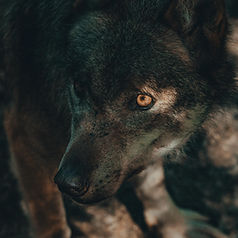
On Aug. 24, 2026, USDA-Wildlife Services verified wolves killed a miniature horse in the town of Cloverland, Douglas County.
On Aug. 26, 2026, USDA-Wildlife Services verified wolves killed a donkey in the town of Cloverland, Douglas County. Visual deterrents have been deployed as a non-lethal abatement measure.
On Aug. 26, 2026, USDA-Wildlife Services verified a level 3 human health and safety complaint from wolves in the town of Cloverland, Douglas County. Level 2 human and health safety complaints are defined under the wolf conflict investigation classifications.
The Wisconsin Department of Natural Resources (DNR) partners with the U.S. Department of Agriculture's Wildlife Services department to investigate reported conflicts with wolves. Interactive maps, past reports and damage payment information is available on the DNR's website.
Interactive Wolf Depredation Threats Map
This resource shows locations of wolf depredation and threat conflicts verified between 2013 and the present. Click here to launch.
Depredation Reports
Depredation reports detail individual Wildlife Services reports, including if the report was verified as wolf depredation or determined as another cause. View past reports here.
Livestock producers: If you suspect suspect a wolf or bear has depredated or is harassing your livestock, contact USDA-Wildlife Services at 1-800-433-0663 (southern Wisconsin) or 1-800-228-1368 (northern Wisconsin).

Bats emerge from their roosts at dusk. / Photo Credit: Wisconsin DNR
Great Wisconsin Bat Count | 2026 Results
Thank you to everyone who participated in the 12th Annual Great Wisconsin Bat Count this summer! Scientists, landowners and volunteers spent a few of their summer evenings observing bats as they left their roosts both before the newborn pups take flight and after.
This collaborative effort helps our staff better understand the populations of little brown bats and big brown bats in Wisconsin, and we’re so grateful to everyone who offered their time to help these efforts!
This year’s post-volancy (flight) count included over 120 roosts and more than 20,000 bats!
Little Brown Bats
16,865 individuals at 57 sites
Big Brown Bats
3,714 individuals at 67 sites
Last year’s totals were 4,570 big brown bats and 20,944 little brown bats, so we are down by quite a bit for both species.
However, nearly 17,000 little brown bats is still an impressive number, and we’re still waiting on a few counts at sites that may push this number up another few thousand bats. Looking back at the statewide counts for big brown bats, there’s a fair amount of variation in totals for this species, and this year, many roost monitors noted many fewer or no bats at sites. This is possibly because the very hot conditions caused them to seek cooler places as soon as the juveniles were able to fly. Big brown bats in general seem to be less tied to specific roosts and readily shift around among sites depending on what’s going on with temperature, time of year and even parasites. Many who note bats leaving in July often record them returning, sometimes in large numbers, later in the season.
As far as the decrease in little brown bats, there are a few possible reasons:
-
Cold weather in May and June may have had a negative impact on pregnant bats. This may have limited food and forced them to use more energy to stay warm on cool nights.
-
Pup mortality isn’t a likely factor at little brown roosts because our volunteers and landowners often report on this in addition to participating in bat counts and we didn’t receive such reports.
-
Since little brown bats tend to roost in large numbers, we may be approaching the “carrying capacity” for some of these sites where the space can’t support much higher numbers of bats than we’ve seen recently.
-
Large increases in prior years may have been possible because of how detrimental white-nose syndrome (WNS) was to bat populations. Reaching the endemic phase of WNS may mean more steady numbers and not as striking yearly increases as bat colonies recovered.
Overall, despite lower bat numbers, we're still optimistic for the ongoing recovery of little brown bats and the continued health of big brown bats in the state. Thank you to everyone who surveyed bats this summer!


FOR IMMEDIATE RELEASE: Aug. 27, 2026
Contact: Jason Fleener, DNR Wetland Habitat Specialist
Jason.Fleener@wisconsin.gov or 608-220-9023
DNR Anticipates Increase For 2026 Wild Rice Harvest
Wild rice harvesting is open to all Wisconsin residents and provides the opportunity to forage a natural food source that is unique to the upper Midwest. / Photo Credit: Wisconsin DNR
MADISON, Wis. – The Wisconsin Department of Natural Resources today announced that the wild crop is showing improvements in production in 2026 compared to the last few years of low production.
Spring began with heavy rainfall across northern Wisconsin in April, followed by a pattern of drought through the summer. This created relatively stable conditions for wild rice throughout the growing station.
“Wild rice harvesters who are looking to fill their pantries may find some good wild rice beds, but they may encounter low water levels that could make navigation by canoe a challenge,” said Jason Fleener, DNR wetland habitat specialist.
Water depth will be dependent on localized rainfall amounts and how dams are being operated in local areas. While wild rice crop production is generally better this year, experienced harvesters should not expect to see crops that they saw decades ago. Some local lakes may be experiencing declines or continue to struggle to produce wild rice. There is a long-term trend of declining wild rice production in Wisconsin due to factors such as climate change, poor land and water use and water quality issues.
However, harvesters should find plenty of opportunities to harvest good wild rice beds across northern Wisconsin this year if they are willing to travel and scout.
The Great Lakes Indian Fish & Wildlife Commission maintains the Annual Harvest Outlook webpage, which includes helpful information for harvesters and wild rice production conditions for some wild rice waters in Wisconsin. This page also includes a table of date-regulated wild rice harvesting waters, which may be opened to harvest on designated dates or deemed closed to harvest throughout the season. These rules apply to both tribal and nontribal harvesters. State and tribal officials discuss crop conditions for each waterbody before decisions are made to open or close waters for harvest each year.
Openings and closures will be updated daily on the webpage throughout the harvest season. Harvesters may also sign up for email updates from the DNR to receive the latest information on harvest openings and closures throughout the season.
All other waters that are not included in the table in the Annual Harvest Outlook are not date-regulated, meaning they may be harvested whenever the harvester chooses. However, the DNR encourages harvesters to be good wild rice stewards by waiting until the crop is mature and ready to drop seed.
Wild rice is ready for harvest when it drops from gentle strokes across the seed head while “flailing” or “knocking” using ricing sticks. If little to no rice is falling, harvesters are encouraged to try again at least a few days later or try another wild rice bed. Harvest efforts on immature beds inhibit the maturation of the rice kernels, negatively impacting the harvest experience for others and inhibiting the long-term sustainability of wild rice production. The maturity or ripeness of wild rice beds may vary over the course of a month between different waterbodies across the state over the months of August and September. Peak maturity for most wild rice beds occurs in early September.
State and tribal officials and other partners are investing significant resources and focus into restoring and improving wild rice production on waters throughout the state. This involves an improved understanding of how wild rice responds to various environmental conditions through research, sharing traditional knowledge and a holistic approach managing healthy aquatic ecosystems. That knowledge is put into practice with management on public waters, which includes wild rice seeding, water level manipulation, invasive species control and watershed-based policies. Outreach and education to the public about the value and good stewardship of wild rice in Wisconsin are also increasing.
“I am seeing more groups step up now than ever with interests to collaboratively manage and protect wild rice,” Fleener said. “This gives me hope for wild rice."
In 2026, Wisconsin is celebrating the first-ever Wild Rice Week, Aug. 30 to Sept. 6, to raise awareness around wild rice. Found only in the upper Midwest and parts of Canada, wild rice was once abundant in northern Wisconsin and continues to hold a timeless, unchanging place in the culture, identity and spirituality for many Tribal Nations in Wisconsin.
For more information on harvesting wild rice, licensing and regulations, visit the DNR’s Wild Rice Harvesting webpage.

FOR IMMEDIATE RELEASE: Sept. 11, 2026
Contact: Erin Larson, DNR Deer Herd Health Specialist
Erin.Larson@wisconsin.gov or 608-516-2783
Help Maintain A Healthy Herd This Season: Avoid Baiting And Feeding Deer
Baiting and feeding encourage deer to congregate unnaturally around a specific location, creating an environment where infected deer can quickly spread diseases like CWD. / Photo Credit: iStock/ricardoreitmeyer
MADISON, Wis. – The Wisconsin Department of Natural Resources (DNR) reminds hunters and the public to help keep the state's deer herd healthy by following all baiting and feeding bans and refraining from baiting and feeding in areas where no bans are in effect.
Baiting is the intentional placement of any material, including food, scented materials, salts, minerals and grains, to attract wild animals for hunting purposes. Feeding is the deliberate placement of material used to feed or attract wild animals for non-hunting purposes, including recreational and supplemental feeding, except as allowed for birds and small mammals.
Baiting and feeding encourage deer to congregate unnaturally around a specific location, creating an environment where infected deer can quickly spread diseases like chronic wasting disease (CWD) through direct contact with healthy deer or through indirect contact in the environment.
Infected deer can also leave infectious CWD prions behind in their saliva, blood, feces and urine, creating a risk to any healthy deer that may visit the site in the future. CWD can spread rapidly when these prions remain in an area where more deer are sure to congregate, such as a feed pile.
CWD is an always-fatal disease that affects the nervous system of deer, elk, moose and caribou caused by a misshapen prion protein. The disease can spread through contact with an infected animal's saliva, urine, feces or blood. It can also spread indirectly through exposure to a contaminated environment. CWD prions are extremely resilient, and they can stay in the soil for a long time, making containment of an affected area a challenge.
To mitigate these risks and slow the spread of CWD, state law directs the DNR to impose baiting and feeding bans within any county with a confirmed CWD-positive wild or captive deer or any county within 10 miles of the location of the positive deer.
As directed by state statute, counties fall under a three-year baiting and feeding ban when a wild or farm-raised deer tests positive for CWD in the county. If the CWD-positive deer is found within 10 miles of a county line, the adjoining county will fall under a two-year ban.
If additional CWD cases are found during the lifetime of a baiting and feeding ban, the ban will reset for an additional two to three years. Therefore, the date when a baiting and feeding ban is scheduled to expire within a given county may change due to new farm-raised and wild CWD positive detections.
In counties where baiting and feeding bans are in effect, individuals may still feed birds and small mammals provided feeding devices are within 50 yards of a human dwelling and at a sufficient height or design to prevent access by deer.
Find more information on baiting and feeding regulations and a map of counties with active bans on the DNR’s Baiting and Feeding Regulations webpage.
.jpg)
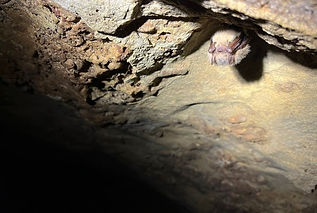
Tricolored bats are one of four species the Wisconsin Bat Program looks for during winter hibernacula surveys. / Photo Credit: Jennifer Redell
Wisconsin Bat Program 2025 Annual Report Highlights
Last year the Wisconsin Bat Program continued to monitor and manage bat populations in the state. Much of the data the program collects comes from both volunteers like roost counters, acoustic surveyors and Wisconsin Bat Ambassadors (outreach volunteers) as well as staff at many program partner groups that include parks, nature centers, conservation groups, universities and other agencies.
The Wisconsin Bat Program is supported, in part, by donations to the Endangered Resources Fund.
Thank you to our donors, partners and volunteers who help make this work possible!
Continued Hope For Little Brown Bats
Good news continues for the largest winter and summer colonies of little brown bats in Wisconsin – numbers continue to grow as key populations recover after white-nose syndrome declines. Little brown bat numbers have surged back to more than 50% of the original population size at Wisconsin’s two largest hibernacula.
Summer Roost Monitoring
-
328 volunteers
-
727 surveys
-
183 roosts
-
23,000 little brown bats counted
-
6,000 big brown bats counted
Summer Acoustic Monitoring
-
325 volunteers
-
455 surveys
-
23,000 bat calls recorded
Winter Hibernacula Monitoring - Wisconsin DNR with Partners at Virginia Tech
-
100 research, survey, and management visits
-
60 hibernacula
-
23 counties
Wisconsin Bat Ambassadors
A total of 41 new participants joined the Wisconsin Bat Ambassadors by completing a workshop through the Wisconsin Master Naturalist Program. Both new and previously trained Ambassadors, including DNR Parks staff, went on to provide more than 1220 hours planning and conducting more than 290 bat education events for more than 16,500 residents and students across Wisconsin in 2025.
Learn more about the 2025 Wisconsin Bat Program and read the full report online.


FOR IMMEDIATE RELEASE: Aug. 18, 2026
Contact: Erin Larson, DNR Deer Herd Health Specialist
Erin.Larson@wisconsin.gov or 608-516-2783
DNR Confirms Epizootic Hemorrhagic Disease In Wild Deer In Washington County
MADISON, Wis. – The Wisconsin Department of Natural Resources (DNR) today announced that two wild deer in Washington County tested positive for the virus that causes epizootic hemorrhagic disease (EHD).
The deer were found dead near the village of Richfield and the city of West Bend. The DNR collected samples for testing after landowners and members of the public in the area reported a cluster of dead deer. Many of the observations reported healthy-looking, dead deer in or near water on their properties.
"Although it may be concerning to see many deer dead in a localized area, these outbreaks rarely have significant long-term population impacts on the overall deer herd," said Erin Larson, DNR deer herd health specialist. "The short duration of these outbreaks and the robustness of our deer populations allow areas experiencing an EHD outbreak to recover quickly."
The virus that causes EHD is spread by midges, which are small flies also known as biting gnats or no-see-ums. The virus does not infect humans, even if a person handles infected deer, eats venison from infected deer or is bitten by infected midges.
Clinical signs of EHD in deer may include excessive salivation, foaming around the nose and mouth and appearing weak or approachable by humans. Carcasses found in or near water sources may also be a sign, as infected deer become feverish and will often lay in water to cool down or drink.
How To Report Sick Or Dead Deer
Anyone who observes a deer that appears to be displaying clinical signs of EHD or is found dead in or near water is encouraged to share their sighting with the DNR. To report a sick or dead deer, please fill out the online Sick or Dead Wildlife Reporting Form, email DNRWildlifeSwitchboard@wisconsin.gov or call 608-267-0866 and leave a message.
If reporting a suspected EHD case, please provide details about the date(s) of observation, the number of deer involved, the body condition of the deer/carcass(es), the exact location (including the county) and your contact information. The DNR only tests a limited number of deer, prioritizing locations within a new county or separate locations from where the disease is already confirmed this season. Reports of suspected cases are valuable to track the impact of the outbreak, even in situations where samples are not collected and tested and all reports are cataloged.
The EHD virus does not survive in carcasses, and DNR staff cannot collect or remove deer that are suspected to have died from EHD. When possible, the DNR also advises against handling found-dead wildlife carcasses, as other harmful pathogens could be present. If it is necessary to move or dispose of the carcass of a wild animal, be sure to use basic protective equipment (such as gloves) and follow good hygiene practices.
About Epizootic Hemorrhagic Disease
EHD is a seasonally common occurrence across the southern and western United States, occasionally showing up in the Midwest. It can be fatal to some deer, especially in populations that have limited previous exposure to the virus, such as in Wisconsin. EHD outbreaks are typically seen between the months of August-October and subside in late fall when the midges that transmit the disease die with the first hard frost.
The first recorded incident of white-tailed deer with EHD in Wisconsin occurred in 2002. There have been sporadic events documented since that time, generally with minimal localized impacts on deer.
Additional information about EHD, including more details on previous outbreaks, is available on the DNR’s EHD webpage.

FOR IMMEDIATE RELEASE: Sept. 8, 2026
Contact: Derek Johnson, DNR Interim Deer Program Specialist Derek.Johnson@wisconsin.gov or 715-661-4822
2026 Archery And Crossbow Deer Hunting Seasons To Open Sept. 12
Stay safe and enjoy the hunt this fall. / Photo Credit: Wisconsin DNR
MADISON, Wis. – The Wisconsin Department of Natural Resources reminds deer hunters that the archery and crossbow seasons open this Saturday, Sept. 12, and run through Sunday, Jan. 3, 2027. (*Archery/crossbow seasons will continue through Jan. 31, 2027 in select Metro subunits and select Farmland Zone counties.)
As hunters head out to the woods, be sure to make safety the number one priority and always use a harness, haul line and maintain three points of contact when getting in and out of a tree stand.
The DNR also reminds hunters that there were updates to several Deer Management Units (DMUs) in 2025. Refer to the updated Season Structure and Management Zone maps to see if the unit you hunt in has changed. Hunters will need to know their management zone and DMU number/county when purchasing an authorization/license and registering their deer.
Bonus antlerless harvest authorizations remain available in many units. Bonus antlerless harvest authorizations may be filled using any weapon type during the appropriate season with the appropriate license but must be filled in the designated zone, unit and land type (public or private).
The 2026 Deer Forecast provides chronic wasting disease (CWD) program updates, volunteer opportunities and district forecasts.
For more information on how to purchase a deer license, finding places to hunt and other hunting programs, please visit the DNR's Deer Hunting webpage.
Around 95% of the funding for the DNR’s Bureau of Wildlife Management comes from the fees from hunting, trapping and fishing licenses and a federal tax on weapon and ammunition purchases. These funds directly support wildlife population surveys, habitat restoration projects, wildlife disease monitoring efforts, running of the hunting and trapping seasons, and the maintenance for 650,000 acres of public land managed for hunting, trapping and other outdoor recreation activities. Thank you to everyone who purchases a license each year and supports wildlife management in Wisconsin.
Heading
FOR IMMEDIATE RELEASE: Sept. 9, 2026
Contact: DNR Office of Communications
DNRPress@wisconsin.gov
DNR Magazine Highlights Wisconsin’s
Only Urban State Forest

The fall issue of Wisconsin Natural Resources magazine is now available in print and online. / Photo Credit: Daniel Robinson
MADISON, Wis. – The Wisconsin Department of Natural Resources today announced that the fall issue of Wisconsin Natural Resources magazine is now available, packed with interesting stories and helpful information to make the most of autumn in Wisconsin.
The cover story highlights Milwaukee’s Havenwoods State Forest, Wisconsin’s only urban state forest. This beautiful gem includes 237 sprawling acres and 8 miles of trails, offering a serene escape from fast-paced city life.
Readers also will learn about the importance of deer hunting, which plays a key role in conservation efforts in the state. Plus, find out about the science behind fall colors and meet a group that embraces the fun and challenges of traditional archery. Other stories touch on the importance of the state’s forest products industry and celebrate Wisconsin’s Scenic Byways, which offer opportunities for beautiful fall color drives around the state.
The new issue also shines a spotlight on the ecological landscapes of Wisconsin. There are 16 of them and they vary widely, depending on where you look. Other stories offer insights on the DNR’s work involving brook trout, black bears, PFAS mitigation and more.
Find magazine details at WNRMag.com and subscribe to the quarterly print edition for just $8.97. You also can call 800-678-9472 or check the website to sign up, renew or give a gift subscription today.
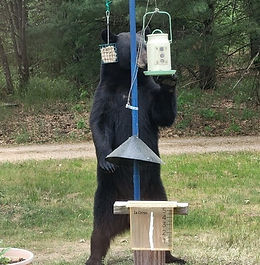
To avoid potential conflicts, it’s important to recognize what attracts black bears and take steps to reduce these attractants whenever possible. Photo Credit: Wisconsin DNR


Two Snapshot Day volunteers on a dock with aquatic invasive vegetation they found. / Photo Credit: Valerie O'Conno
Aquatic Invasive Species Snapshot Day:
Help Protect Wisconsin’s Waters
Two Snapshot Day volunteers on a dock with aquatic invasive vegetation they found. / Photo Credit: Valerie O'Connor
The University of Wisconsin-Madison Division of Extension invites nature lovers of all ages to participate in Snapshot Day, a statewide event focused on searching for aquatic invasive species (AIS) in rivers, lakes and wetlands. This year’s Snapshot Day will be hosted at over 20 locations across Wisconsin on Saturday, Aug. 8, 2026.
On Snapshot Day, volunteers gather at local training sites hosted by community conservation partners. After a brief training on how to identify target AIS and follow search protocols, participants will visit designated monitoring sites to search for invasive species. Any potential findings are documented and shared with the Wisconsin DNR, supporting ongoing efforts to detect, control and manage these species.
Snapshot Day offers a hands-on, community-driven approach to science, allowing volunteers to directly contribute to preserving Wisconsin’s water health. As one 2025 volunteer noted, “I really appreciated the strong sense of community and the shared passion for protecting our lakes. It was fascinating to learn not only about invasive species in our area, but also the challenges others are facing in their own lakes. It reinforced how crucial early detection is in preserving these ecosystems.”
Beyond monitoring, Snapshot Day helps to foster a deeper connection to the natural world. By understanding and protecting these ecosystems, participants contribute to preserving biodiversity and ensuring that future generations can enjoy Wisconsin’s waters. Best of all, this is a free event — no prior experience or special equipment is needed!
Snapshot Day is coordinated in partnership with UW-Madison Division of Extension, the Wisconsin Department of Natural Resources, and local partners. Get involved, enjoy the outdoors, and help protect our waterways — sign up for Snapshot Day today!
This event is recommended for ages 8 and up; minors must be accompanied by an adult.
In Wisconsin


Watch For Spongy Moth Caterpillars And Tree Damage This Summer
Posted on June 10, 2026
By Bill McNee, Forest Health Specialist, Oshkosh
Bill.McNee@wisconsin.gov
A spongy moth caterpillar feeds on a leaf. / Photo Credit: Wisconsin DNR
Property owners are encouraged to monitor their trees for spongy moth larvae and damage this summer to determine whether control measures are needed.
Property owners who have oak, birch, crabapple, aspen, willow and linden (basswood) trees should be particularly watchful because the caterpillars of this invasive insect prefer these species.
However, they will feed on many other kinds of trees and shrubs.
Population Status
Although overall spongy moth populations are currently low, it is possible that some locations will see a rapid population increase this summer if weather conditions continue to be warm and dry. Daily high temperatures in late May and early June reached the mid- to upper 80s, which were often 10-15 degrees above average. Population increases are probably more likely in areas that didn’t have a recent outbreak (temporary population explosion) over the last few years.
A population increase to noticeable or nuisance-level caterpillar numbers would be the likely degree of population increase in 2026. Widespread heavy defoliation is not expected, although heavy defoliation could occur on individual trees or small areas.
Research has shown that the rate of spongy moth caterpillar development reaches its maximum at 84 degrees. If weather conditions remain warm and dry in June, it is likely that parts of southern Wisconsin will have adult females present and laying eggs by early July.
Spongy moth is considered generally established across most of Wisconsin, except the western third of the state. Rising spongy moth populations are most likely to be seen within parts of the quarantined area, but may be noticeable in parts of non-quarantined counties.
Management Options
Spongy moth caterpillars are caught in a burlap collection band. / Photo Credit: Wisconsin DNR
At moderate populations, physical controls can reduce pest impacts and make insecticides unnecessary. Physical controls for larger caterpillars include crushing them, brushing them into soapy water to drown them, and putting up burlap collection bands to destroy caterpillars daily.
Insecticide treatments, including foliage sprays and soil and trunk injections, may be a suitable control option if large numbers of caterpillars are observed on high-value trees. A professional treatment is likely needed when there are high numbers on large trees.
Resources for finding a qualified pesticide applicator include the Wisconsin Arborist Association, the International Society of Arboriculture, the Tree Care Industry Association and a local phone book or online directory.
Monitor Trees For Decline And Mortality
A map of Wisconsin counties, showing 2025 spongy moth tree defoliation (orange) and mortality (black). / Map Credit: Wisconsin DNR
Property owners are encouraged to monitor their trees, particularly oaks, for crown dieback, twolined chestnut borer infestation and mortality in trees that were stressed by drought and defoliation over the past few years. About 98 percent of Wisconsin was not in a droughty condition as of late May, and most trees have started the growing season with adequate soil moisture, so this will help to reduce the amount of new tree decline and mortality.
It is possible that tree mortality could still occur in previously defoliated areas, as these trees may remain alive in a weakened condition for up to three years before finally dying. DNR staff observed approximately 20,000 acres of heavy oak and aspen mortality during aerial surveys last summer. It is likely that additional mortality will be seen in 2026, primarily within the areas that were heavily defoliated in 2023 and 2024.
Consult a forester if significant tree decline or mortality is observed in forest stands, or if planning management activities in stands that were heavily defoliated over the last few years. These stands may still be experiencing a degree of residual stress from the period of drought and defoliation that largely ended in 2024, or from droughty conditions in 2025. Contact an arborist if yard trees are experiencing signs of decline.
Additional Recommendations
Property owners are encouraged to examine their trees and take action. Specifically:
-
Visit the Spongy Moth Resource Center for management information. Options for June and July include physical controls and insecticide application.
-
Watch this video showing how to use a burlap collection band to catch and kill spongy moth caterpillars.
-
Insecticide treatments can be a suitable option for high-value host trees but are not practical for woodlots.
-
Water yard trees weekly during dry periods to help reduce tree stress and aid a tree’s recovery from heavy defoliation, should this happen.
-
Avoid touching the hairy caterpillars, as well as the moths and egg masses that will appear later in the summer. The hairs often cause a skin rash, welt or other irritation. Rubbing alcohol can help to remove the hairs and chemical irritants from skin that is exposed to the hairs.
-
Wait to cut down any trees that are defoliated. Healthy hardwood trees usually produce a new set of leaves a few weeks after caterpillar defoliation.
-
This fall, conduct egg mass surveys to predict the level of the 2027 population and help determine if active management is needed. A “Protect Your Trees From Spongy Moth” video is available online to assist property owners in conducting predictive egg mass surveys. Egg mass oiling or removal are options for the fall months.
Consult an arborist or forester for additional management recommendations.
(Visited 158 times, 1 visits today)
Post navigation
← Spruce Budworm Outbreak Continues In 2026
Spring Weather Damages Trees →
GO
Categories
Tags
#NASF100 Awards Best Management Practices Care for your woods Central WI Forest Health Certification Data and analysis Did you know? Disease Events Events; Wood utilization Financial help Fire management Fire season Firewood Forest benefits Foresters Forest products Health benefits Insect Invasive plant Inventory Logs and lumber Managed Forest Law Northern WI Forest Health Partners Pest Pesticide Pests Preparing for wildfires Preventing wildfires Publications Regulations Research Silviculture South Central WI Forest Health Southern WI Forest Health Statewide Forest Health Taking action Technical assistance Training Tree seedling sales Urban wood Woodland owners Wood utilization
Archives
-
-
How Participation In Archery
Supports Wisconsin’s Wildlife

Manufacturers of archery equipment pay an 11% federal excise tax on an wide assortment of archery equipment. / Photo Credit: U.S. Fish and Wildlife Service
How Participation In Archery
Supports Wisconsin’s Wildlife
Manufacturers of archery equipment pay an 11% federal excise tax on an wide assortment of archery equipment. / Photo Credit: U.S. Fish and Wildlife Service
The primary funding sources used to support wildlife conservation, hunter education and shooting sports in Wisconsin come from hunting license fees and federal excise taxes paid on firearms, ammunition and archery equipment.
Established in 1937, the Federal Aid in Wildlife Restoration program channels these federal excise taxes to state fish and wildlife agencies for conservation.
Manufacturers of archery equipment pay an 11% federal excise tax on the following archery equipment:
-
Compound bows, longbows, recurve bows and crossbows.
-
Bow sights and sight extensions, levels, stabilizers, limbs, strings, wrist slings, silencing pads, grip formers, saddles and handles.
-
Draw stops, kisser buttons, nocking points, bowstring silencers, tip protectors, brush buttons, cable guards and slides, bow covers, peep sights, finger protectors and draw check tools.
-
Arrow shafts, field points, broadheads, arrow plates, quivers and arrow holders or rests.
Over the last decade, the archery and bowhunting industry has contributed a national average of $57 million annually to conservation and recreational shooting through the federal excise tax (per the Archery Trade Association). Whether a hunter or target shooter, your continued involvement in shooting archery helps preserve Wisconsin's hunting heritage.
FOR IMMEDIATE RELEASE: April 3, 2026
Contact: Marcus Rufledt, DNR Wildlife Program Specialist
Marcus.Rufledt@wisconsin.gov or 608-438-438-6480
Be Bear Aware: Take Steps Now To Avoid Potential Conflicts With Black Bears This Spring
To avoid potential conflicts, it’s important to recognize what attracts black bears and take steps to reduce these attractants whenever possible. / Photo Credit: Wisconsin DNR
MADISON, Wis. – The Wisconsin Department of Natural Resources (DNR) encourages the public to be bear aware and take steps to prevent potential conflicts with black bears this spring. As the weather warms and people across the state begin spending more time outside, encounters with wildlife, including bears, increase.
Every spring, Wisconsin’s black bears emerge from their winter torpor and leave their dens in search of food and potentially new territory. These explorations sometimes cause unexpected interactions between black bears and the public. Bears are normally solitary forest animals, but their powerful sense of smell can lead them into urban areas in search of food, especially in the spring and fall.
To avoid potential conflicts, it’s important to recognize what attracts black bears and take steps to reduce these attractants whenever possible. Black bears are known for returning to locations where they’ve found good food sources in the past. That makes prevention the best tactic.
Although black bears are much more common in the northern half of the state, southern Wisconsin has seen more black bear activity in recent years. No matter where in Wisconsin you live or play, follow these basic steps from BearWise® to avoid attracting black bears around your home or campsite:
-
Never feed or approach bears. Never feed a bear, whether intentionally or not. The risk of unexpected interactions increases when bears begin to associate people with food. If bears find a consistent food source around people or people actively feed a bear, the bear will make a habit of visiting the area or approaching people.
-
-
Secure food, garage and recycling. Food and food odors attract bears, so don’t reward them with easily available food, liquids or garbage.
-
Remove bird feeders when bears are active. Birdseed and grains have lots of calories, so they’re very attractive to bears. Removing feeders is the best way to avoid creating conflicts with bears.
-
-
Never leave pet food outdoors. Feed pets indoors when possible. If you must feed pets outside, feed in single portions and remove food and bowls after feeding. Store pet food where bears can’t see or smell it.
-
-
Clean and store grills inside. Barbeque grills and picnic tables often have leftover food scraps or residues on them that can attract black bears. Clean surfaces after use in public spaces to reduce negative human-bear interactions. Store clean grills and smokers in a secure area that keeps bears out.
-
-
Alert neighbors to bear activity. See bears or evidence of bear activity in your backyard or neighborhood? Tell your neighbors and share information on how to avoid bear conflicts. Bears have adapted to living near people; now it’s up to us to adapt to living near bears.
Know What To Do If You Encounter A Bear
If a black bear is near your home or cabin, from a safe location, try to scare the bear away by making loud noises (like clanging pots and pans together) or throwing objects in the bear’s direction. Black bears tend to avoid interactions with people if escape is possible, so make sure it has a clear escape route – never corner a bear. Do not turn your back to a bear or run away. Once the bear is gone, remove any items that may have attracted the bear in the first place.
If you encounter a black bear while in the woods, stay calm and do not run. Wave your arms and make loud noises to scare it away. Then, back away slowly and seek a safe location where you can wait for the bear to leave. Never approach a bear. For your safety, do not attempt to break up a fight between a pet and a bear.
If unable to resolve a recurring issue with a nuisance bear, contact the U.S. Department of Agriculture (USDA)'s Wildlife Services toll-free lines:
-
USDA Wildlife Services, Northern Wisconsin: 800-228-1368 (in-state) or 715-369-5221
-
USDA Wildlife Services, Southern Wisconsin: 800-433-0663 (in-state) or 920-324-4514
-
For more information on how to avoid unexpected interactions with black bears, visit the DNR’s Black Bear Management webpage or visit our partners at BearWise®.


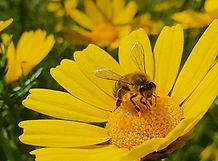
Help Butterflies, Bees And Other Pollinators During Pollinator Week
Celebrate Wisconsin's Native Pollinators By Creating Habitat And Volunteering
Dusted skippers are a Wisconsin special concern species. / Photo Credit: Wisconsin DNR
MADISON, Wis. – The Wisconsin Department of Natural Resources (DNR) encourages Wisconsinites to help native pollinators during Pollinator Week, June 22-28, and year-round with a few simple lawn care habits, volunteering and supporting the Endangered Resources Fund.
Most of Wisconsin's pollinators are bees (Wisconsin has over 400 native species, including 21 bumble bee species), butterflies and moths. Wisconsin's pollinators also include hummingbirds and some beetles and flies. These animals and other pollinators visit flowering plants and transfer pollen from flower to flower. Pollinators help plants grow fruits and seeds and encourage genetic diversity.
“Wisconsin is an important part of the remaining habitat for the federally endangered rusty patched bumble bee, and we’re the state with the largest remaining population of Karner blue butterflies. Between these two rare insects and the hundreds of other pollinators in Wisconsin, caring for natural areas and our lawns and gardens can help,” said Jay Watson, DNR insect ecologist. “Whether you become a volunteer or practice lawn care that’s free from pesticides, there are small ways anyone can help.”
In addition to supporting rare pollinators, flowering plants provide food to common pollinators, other insects, people and wildlife. They also support healthy ecosystems that clean the air and stabilize soil. Despite the importance of native pollinators, many are facing population declines.
Here are some ways Wisconsinites can help pollinators:
Around Your Home And Garden
-
Plant native plants and trees. Early blooming trees are an important food source for bumble bee queens emerging from hibernation and many other insects, which in turn provide food for birds and bats. Flowers that bloom throughout the growing season, like columbine, bee balm and goldenrod, fill your garden with colors for months while providing food to pollinators.
-
Add host plants for butterfly larvae. Many butterflies depend on specific plants for their lifecycles, like milkweeds (monarchs), violets (meadow fritillary) or dill, fennel and parsley (black swallowtails). If you live in the Karner's native range, consider planting their only host plant, native wild lupine (Lupinus perennis).
-
Provide shelter. Pollinators need safe places to rest, avoid bad weather and spend the winter. You can maintain brush and leaf piles, and avoid trimming hollow-stemmed plants through the winter.
-
Maintain a yard free from pesticides and herbicides. Insecticides can harm or kill pollinators, and herbicides can kill the plants they need to survive.
In Your Community
-
Become a trained volunteer with the Wisconsin Bumble Bee Brigade, Wisconsin Karner Blue Butterfly Volunteer Monitoring Program or Monarch Larva Monitoring Project.
-
Show off your love of Wisconsin’s pollinators with new rusty patched bumble bee or Karner blue butterfly merch.
-
Support pollinator conservation efforts with a donation to the Endangered Resources Fund.


Young Wild Animals Are On The Move
Here's What To Know
Watch out for young wild animals this time of year. You are more likely to run into them right now. / Photo Credit: iStock/timharman
Summer is officially underway, and the Wisconsin Department of Natural
Resources (DNR) reminds the public that wild animals and their young will be on the move. Remember, it is important to leave young wild animals alone to allow them to grow up in their natural environment.
Check out the information below for information on Wisconsin’s wildlife.
-
Cottontail rabbits have litters of kits continuously from spring through fall. They open their eyes at one week old and begin exploring outside the nest for short periods to nibble on grasses after about 2-3 weeks. Once they are the size of a softball and have upright ears, kits are independent.
-
Young songbirds that leave the nest before their flight feathers are fully developed are called fledglings. They are still partially dependent on their parents for food; however, they will start to make short, low-level practice flights, as they build up their strength and coordination and gradually learn to forage for food.
-
Opossums are the only marsupial found in Wisconsin. Females have a pouch on their abdomen in which they carry and nurse their young, called joeys. Joeys are born in March or April and spend about two months nursing within their mother's pouch before they start to get too large and take to riding around on their mother's back.
-
Raccoon kits are 12-14 inches long and capable of walking, climbing and exploring by 6-8 weeks of age. While raccoon kits are not weaned until at least 12 weeks old, it is completely normal to see them out and about without their mother nearby. They are very curious and vocal animals but are not as nocturnal as mom at a young age.
-
Eastern gray squirrels raise their young in leaf nests, called dreys, as well as tree cavities and man-made structures like attics. Litters typically consist of two to four young, called kits, and by seven weeks old, they will begin to explore outside the nest area. Once weaned, kits are quickly independent and on their own (approximately 11-12 weeks).
-
White-tailed deer fawns are not strong enough to follow their mother for the first 2-3 weeks of life and will lay very still to reduce the chance of being found. Their spotted coat and minimal scent help them blend into their environment and keep them safe as they spend most of the day alone while mom forages nearby.
-
Ducklings are covered in down feathers, and within about 24 hours of hatching, the hen will lead her brood to water. They will not return to the nest. The ducklings stick close to their mother until they can fly at around two months after hatching. It is important that ducklings learn natural behaviors and do not become imprinted on humans.
-
Red fox dens can be in forests, ravines, woodlots and in urban areas such as culverts and roadsides. At five weeks old, kits may be seen exploring and playing outside the entrance of the den. By the time they’re three months old, kits start to join their parents on hunts and work on developing the skills they need to catch prey like mice and rabbits.
As young wild animals start to learn their independence, please leave them alone. In rare cases when intervention is truly needed, wildlife rehabilitation is the main option. However, wildlife rehabilitation facilities often reach capacity during the warmer months and may need to limit admissions of sick, injured and orphaned wildlife. The public can help reserve space for wild animals truly in need by always contacting a licensed professional for advice before assuming a wild animal needs help.
Visit the DNR's Keep Wildlife Wild webpage to learn more about the normal behaviors of Wisconsin’s wildlife and why it is important for young wild animals to grow up in their natural environment.
FOR IMMEDIATE RELEASE: June 24, 2026
Contact: DNR Office of Communications
DNRPress@wisconsin.gov
DNR Announces 2026 Ruffed Grouse And Pheasant Survey Results

Spring survey results for pheasant and ruffed grouse give hunters a picture of what to expect this fall. / Photo Credit: Michele Woodford
MADISON, Wis. – The Wisconsin Department of Natural Resources (DNR) today announced that 2026 data is now available from annual spring surveys of Wisconsin ruffed grouse and pheasant.
Pheasant observations were above the 5-year average for the third consecutive year. The results of the ruffed grouse survey are on track with the 10-year population trend. Find these wildlife survey reports and others on the DNR's Wisconsin Wildlife Reports webpage.
2026 Spring Pheasant Survey
The DNR reported the 2026 average pheasant observations at 0.73 pheasants per stop, a decrease from 2025 at 0.81 pheasants per stop. For the third year in a row, the count remains above the most recent 5-year average (0.56 pheasants per stop).
DNR wildlife biologists use a measurement known as an abundance index to assess the state's wild pheasant population each year. On trend from past years, abundance was highest in the northwestern part of Wisconsin's pheasant range and lowest in the east-central region.
The DNR thanks the agencies and groups that helped collect data via roadside surveys. For more information regarding pheasant hunting and management, visit the DNR's Pheasant Hunting and Management webpage.
2026 Spring Ruffed Grouse Survey
The DNR also released the results of its annual Roadside Ruffed Grouse Drumming Survey. The survey measured ruffed grouse drumming activity heard along roadsides throughout Wisconsin this spring and showed an 11% decrease in statewide drumming activity compared to 2025.
“We observed an 11% decline in statewide drumming abundance this year, with the largest declines being in the Driftless and Central priority areas of the state. A decline was anticipated this year, as the low points of the 10-year population cycle typically occur in years that end in 4, 5 and 6,” said Alaina Roth, DNR ruffed grouse specialist. “We likely observed higher abundance estimates in 2024 and 2025 due to exceptional nesting and brooding conditions in the prior years."
Since 2021, survey data has been organized and analyzed by ruffed grouse priority areas to help monitor key populations across the state, as defined in the Wisconsin Ruffed Grouse Management Plan 2020-2030.
The DNR thanks the agencies and groups, including the U.S. Forest Service, tribal partners and volunteers, who helped the department collect ruffed grouse data via roadside surveys.
For more information regarding grouse hunting or managing habitat for ruffed grouse in Wisconsin, visit the DNR's Ruffed Grouse Hunting webpage.

Endangered Resources | Natural Heritage Conservation News
Black-throated green warbler. / Photo Credit: Ryan Brady
Wisconsin Bird Conservation Updates | September 2026
International Connecticut Warbler Partnership Publishes Conservation Actions
In 2022, an international group of biologists and managers, led by DNR avian ecologist Ryan Brady, met to assess the status of the Connecticut Warbler, a relatively poorly known boreal forest songbird. The group recently published a paper in Avian Conservation & Ecology titled, “Connecticut Warbler conservation: prioritizing action amid rangewide population decline.”
Conservation recommendations offered in the paper include:
-
Building strong international partnerships.
-
Implementing high-leverage habitat management on the breeding grounds.
-
Establishing standardized monitoring programs.
-
Targeted research to fill key knowledge gaps, including mapping non-breeding distribution, identifying critical stopover sites, and assessing demographic factors that limit population growth.
“I’m extremely proud to spearhead this group and inspired by the power of one tiny bird to unite people across continents,” Brady said. “This paper is the culmination of that collaboration, and hopefully just the beginning of ensuring a brighter future for this rare and elusive songbird.”
Piping Plovers Nest On Wisconsin Point For The First Time in 49 Years
Piping plovers are migratory shorebirds that are endangered in the Great Lakes Region. This year, that population included 99 breeding pairs and at least 160 wild chicks fledged, both record numbers since the species was listed as endangered in 1986.
This species has highly specialized habitat needs including large expanses of sand dunes and beaches. There are few places like this in the state, especially with limited disturbance from humans. As a result, there are only four sites with nesting piping plovers in Wisconsin.
Among them was Wisconsin Point Bird Sanctuary at the western tip of Lake Superior, which in 2026 hosted the area’s first nesting pair in nearly a half-century, at a site specifically managed to attract plovers. This is a huge milestone for this rare species and wouldn’t have been possible without a collaborative effort between the U.S. Army Corps of Engineers, U.S. Fish and Wildlife Service, Wisconsin Department of Natural Resources, St. Louis River Alliance (SLRA) and U.S. Environmental Protection Agency, with funding from the Great Lakes Restoration Initiative.
Wisconsin Point Bird Sanctuary is owned by the Wisconsin DNR and is closed to the public from April 1 to Aug. 24 every year to protect endangered species nesting habitat.
Lights Out During Peak Migration
Hundreds of millions of birds will move through Wisconsin during the peak of fall migration over the next few weeks.
Lights Out Wisconsin is urging everyone to please turn off non-essential outdoor lights from 11 p.m. – 6 a.m. during this critical period!
Why it matters: Most migrating birds travel at night. Artificial light can disorient them and draw them into urban areas, where they are at much higher risk of window collisions.
In the U.S., between 1 and 3.5 billion birds are killed annually by window collisions, making this one of the leading threats to bird populations.
To further help, you can also add netting, cords, stickers or other marks on the outside of your windows, spaced no more than 2 inches apart. A single sticker of any shape is not effective. For a quick fix, use a bar of soap or washable window markers – a great, family-friendly activity!
Looking for real-time alerts for peak migration nights? Sign up for BirdCast migration alerts to get notified when major movements are expected in your region.

Summer 3D Archery Shoots: Where Practice Meets Adventure

Photo Credit: The Council to Advance
Hunting and the Shooting Sports
When summer arrives in Wisconsin, archers trade indoor lanes for wooded trails, rolling hills and lifelike targets. Summer 3D archery shoots have become a cornerstone of the bowhunting community, offering practice with an immersive outdoor experience that closely mirrors real hunting scenarios.
Unlike traditional target shooting, 3D shoots are set along natural terrain, often featuring steep climbs, uneven footing and realistic shot angles. These courses are designed to simulate real-world hunting situations, helping archers refine distance judgment, shot placement and composure under pressure.
Local clubs and organizations play a major role in filling the summer archery event schedule. Many host regular 3D shoots on wooded courses, offering accessible events for archers of all ages and skill levels.
Check in for shoots, clubs and even leagues.
What truly sets Wisconsin apart is the diversity of its 3D archery scene. From family-friendly club shoots to physically demanding mountain-style courses, there’s something for everyone. Many events include food, camping and social gatherings, turning a day of shooting into a full weekend experience.
Summer 3D shoots are more than scoring rings, they’re about preparation, camaraderie and time spent outdoors. Whether you’re tuning up for fall hunting season or simply enjoying the sport, Wisconsin offers one of the best 3D archery communities in the country.

Verified Wolf Depredation In Ashland County
On July 22, 2026, USDA-Wildlife Services verified that wolves killed a calf on a property in the town of Gurney, Iron County. Auditory deterrents have been deployed as a non-lethal abatement measure.
The Wisconsin Department of Natural Resources (DNR) partners with the U.S. Department of Agriculture's Wildlife Services department to investigate reported conflicts with wolves. Interactive maps, past reports and damage payment information is available on the DNR's website.
Interactive Wolf Depredation Threats Map
This resource shows locations of wolf depredation and threat conflicts verified between 2013 and the present. Click here to launch.
Depredation Reports
Depredation reports detail individual Wildlife Services reports, including if the report was verified as wolf depredation or determined as another cause. View past reports here.
Livestock producers: If you suspect a wolf or bear has depredated or is harassing your livestock, contact USDA-Wildlife Services at 1-800-433-0663 (southern Wisconsin) or 1-800-228-1368 (northern Wisconsin).
DNR Accepting Shooting Range Grant Applications
Applications Due Aug. 15
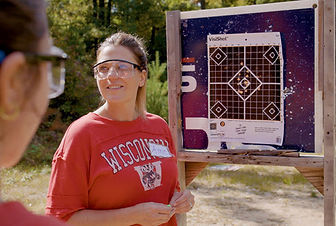
The DNR's Shooting Range Grant Program provides financial assistance for safe and accessible firearm or archery recreational shooting opportunities for the public. / Photo Credit: Wisconsin DNR
MADISON, Wis. – The Wisconsin Department of Natural Resources (DNR) is accepting applications for the Shooting Range Grant Program through Aug. 15, 2026.
The grant program provides financial assistance for safe and accessible firearm or archery recreational shooting opportunities for the public. Managers of public or private shooting ranges or members of the public interested in building a new range are encouraged to apply. Ideal ranges are located near highly populated areas and offer educational programming for the public related to hunting and shooting sports. Ranges operating as a for-profit business are not eligible for funding.
Previous projects awarded grant funding include renovating or constructing backstops, shooting benches, restrooms and indoor ranges. Former grant winners can apply again.
The grant program is administered as a reimbursement grant for incurred expenses. All new construction must be compliant with the Americans with Disabilities Act.
The 2026 grant cycle will have $600,000 available for range improvement projects. In 2025, the DNR awarded the full program budget of $600,000 to 10 projects, leveraging $238,900 in matching contributions and $838,900 in total project costs.
Prior to submitting a completed application, all applicants are required to contact either Sarah Brenner, DNR Shooting Range Grant Program manager, at Sarah.Brenner@wisconsin.gov or 715-894-8666 or Brett Johanen, DNR public shooting range manager, at Brett.Johanen@wisconsin.gov or 608-772-4928 to discuss their interest in applying.
The shooting range grant funding is made possible by a federal excise tax on firearms, ammunition and archery equipment through the Pittman-Robertson Act.
More information about applying, eligible items and resources can be found on the DNR’s Shooting Range Grant Program webpage.

Michael.Hillstrom@wisconsin.gov
Adult blacklegged (deer) ticks are already active this year, as of March 2026. The adults start looking for a host as soon as it warms up to around 40 degrees Fahrenheit.
In Wisconsin, between 20-60 percent of adult ticks are infected with the bacteria that causes Lyme disease. However, the risk of getting Lyme disease is higher with bites from nymphal ticks, which are most abundant in June and July, because they are so tiny and difficult to find. While only 10-28 percent of nymphs are infected with the Lyme disease bacteria in Wisconsin, rapid removal of a tick can reduce the risk of infection because it takes at least 24 hours for the Lyme bacteria to spread.
To reduce the risk of contracting tick diseases, wear long sleeves and pants and use an insect repellent with ingredients such as DEET, Picaridin or oil of lemon eucalyptus. Clothing can also be treated with permethrin (do not use permethrin directly on skin). Recent research (Anholeto et. al., 2026) found that lemon eucalyptus oil (commercial versions of the essential oil that are formulated and marketed for tick repellency) was an effective repellent of both blacklegged ticks and American dog ticks on various fabrics. Permethrin acts through contact toxicity, so a repellent essential oil product is a useful addition to preventative measures.
After potential exposure to ticks, always do a thorough tick check. Be especially careful to check the lower body, because nymphs usually get on by the feet and are easy to miss below the waist. Shower within two hours of coming indoors and put clothes in the dryer on high heat for 10 minutes to kill any ticks that you may have picked up while outdoors.
If you find an attached tick, remove it as soon as possible and monitor for disease symptoms for 30 days.
You can use resources such as the UW-Madison Wisconsin Tick and Tick-Borne Diseases webpage or the Wisconsin Department of Health Services (DHS) “Illnesses Spread by Ticks” webpage to identify ticks and learn about the diseases they cause or submit a photo to the DHS for tick identification.
If you’d like to contribute to tick research, consider downloading The Tick App.
For information about tick safety, visit the DHS Tick Bite Prevention website and watch for their Fight the Bite campaign.
(Visited 375 times, 4 visits today)

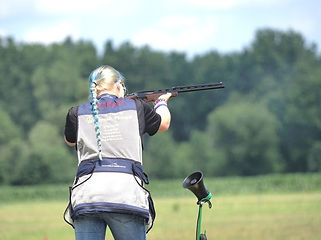
Shooting Sports Benefit Our Youth
There are many opportunities and reasons to investigate shooting sports for youth. / Photo Credit: USA Clay Target League
Sports are popular among youth, but have you ever considered shooting sports?
Opportunities include scholastic clay target teams, the National Archery in the Schools Program or youth archery leagues, 4H shooting sports, youth rifle programs, biathlon and more.
Most shooting sports appear in the summer and winter Olympic games – and for good reason. Shooting sports focus on fine motor skills and breath control to influence the precision and accuracy of a shot. Those with cardiovascular stamina, physical stability and mental resilience can develop the muscle memory to repeat precise and accurate shots up to 250 times in a row, from different distances and shooting positions. The biathlon and the pentathlon include skiing and running laps, which intensify the challenge of producing a stable shot when the body is under higher cardiovascular stress.
Unlike some other sports, stationary shooting sports like archery and clay target shooting can be enjoyed by many different abilities and strengths.
Students participating in shooting sports programs report feeling a higher level of responsibility and confidence, improvements in academic performances and more connected to their peers. These benefits are in direct opposition to the negative effects of exposure to social media at an early age. Shooting sports also are an activity that participants can continue at all ages. Most importantly, youth shooting sports programs have excellent safety records due to the structured training in safe firearm handling.
If you’re interested in learning more about youth shooting opportunities, check out the following programs:

How To Find Your Deer Management Unit
Hunters will need to know their deer management zone when purchasing an authorization/license and for registering their deer. / Photo Credit: Wisconsin DNR
Every few years, the DNR reviews the state’s deer management units (DMUs). While there were no changes for the 2026 season, there were significant changes in 2025.
To better manage the units in the forest zones, changes were made to the boundaries of the DMUs in the Northern and Central Forest zones. Minor changes were also made to metropolitan sub-unit boundaries. A few of the Farmland Zone unit boundaries were modified because of other changes made to the forest zones.
DMUs in both Northern and Central Forest Zones are now labelled with a number (as opposed to a county name), and the Farmland Zones DMUs will still be denoted by their county names. The DNR encourages hunters to check the DMU and Season Structure page to verify which DMU they plan to hunt in, even if they hunt in the farmland zones, because the counties that border the forest zones may have new boundaries and may overlap multiple DMUs. It is important for hunters to be familiar with these changes.
Hunters will need to know their management zone and DMU number/county when purchasing an authorization/license or registering their deer.
The DNR encourages hunters to consult the most recent Deer Management Unit Map, available on the DNR’s Deer Hunting webpage before purchasing a deer hunting license.
When registering harvests in their Go Wild account, hunters will also be offered at zone map prompt to help them choose their correct DMU.


FOR IMMEDIATE RELEASE: Sept. 3, 2026
Contact: Kelly Maguire, DNR Natural Resources Operations Supervisor, Poynette State Game Farm
Kelly.Maguire@wisconsin.gov or 608-635-8120


Wisconsin turkey hunters registered 47,725 birds this season, 8.6% above the 5-year average of 43,953. / Photo Credit: Northeast Association of Fish and Wildlife Agencies
MADISON, Wis. – The Wisconsin Department of Natural Resources (DNR) today announced preliminary totals for the 2026 spring turkey season. Wisconsin turkey hunters registered 47,725 birds this season, 8.6% above the 5-year average of 43,953.
This spring marks 50 years since wild turkeys were successfully reintroduced to Wisconsin. The first statewide hunt took place in the spring of 1983. Turkey numbers continue to remain stable and they are now found in all 72 counties of the state.
"The reintroduction of wild turkeys in this state has been a remarkable success. 2026 marks the 44th year we have been hunting turkeys," said Taylor Finger, DNR gamebird biologist. "With mild winters and average to above average nesting and brood rearing conditions the last several years, Wisconsin’s turkey population is very healthy, and we continue to see stable harvest trends that indicate stable to increasing numbers across most of the state."
The 2026 spring turkey season started on April 12 with the two-day youth hunt for hunters under 16 years old and concluded on May 26.
The regular season is divided into six separate one-week periods, opening April 15 and closing May 25. These separate periods help maximize hunter opportunities while minimizing interference for a more sustainable harvest.
A total of 254,226 authorizations were available this spring, and hunters applied for or purchased 235,429 of them. The robust participation and harvest numbers demonstrate ample opportunities across the state.
The 2026 statewide fall turkey hunting season will open Sept. 12 and run through Jan. 3, 2027.
The deadline to apply for next spring’s (2027) turkey season is Dec. 10. Hunters can apply for harvest authorizations online through the Go Wild license portal. Any harvest authorizations not awarded in the December drawing will be available for purchase in March as a bonus harvest authorization.
Learn more about turkey hunting in Wisconsin on the DNR’s Turkey Hunting webpage.
DNR Announces Changes To Ring-Necked Pheasant Stocking For Fall 2026
FOR IMMEDIATE RELEASE: Sept. 3, 2026
Contact: Kelly Maguire, DNR Natural Resources Operations Supervisor, Poynette State Game Farm
Kelly.Maguire@wisconsin.gov or 608-635-8120
DNR Announces Changes To Ring-Necked Pheasant Stocking For Fall 2026
There will be a reduction in the number of ring-necked pheasants that will be stocked this fall due to budget constraints. / Photo Credit: Wisconsin DNR
POYNETTE, Wis. – The Wisconsin Department of Natural Resources has announced a reduction in the number of ring-necked pheasants that will be stocked this fall. Due to budget constraints within the DNR's Wildlife Management Program, the recent stocking goal of 75,000 pheasants over 82 state-owned properties will be reduced to 65,000 birds.
An additional cost-saving measure for the 2026 pheasant stocking includes shortening the stocking season to end on Nov. 19, 2026. The late season stocking that is normally scheduled for late December will not occur this year. It is important to note that although the pheasant stocking schedule has changed for 2026, the pheasant hunting season remains unchanged and will run from Oct. 17, 2026, through Jan. 3, 2027.
Hunters and trappers provide critical support for Wildlife Management Program activities via the purchase of licenses and wildlife stamps; however, fees for those products have remained stable for 21 years, whereas program costs have increased by an estimated 66% over that period. This has forced the program to identify means of reducing costs. These reductions will come from multiple areas, including the pheasant stocking program. The rising costs of supplies and labor are major contributors to this decision. For example, in 2021, the cost to raise a pheasant was $6.91 per bird; by 2025, that cost had increased to $9.80 per bird. Similarly, the cost of supplies needed to replace a pheasant pen increased from $3,060 in 2021 to $6,915 in 2025.
"We continually strive to maximize the value of conservation funding for Wisconsin’s wildlife, their habitat and our constituents," said Scott Walter, director of the DNR's Wildlife Management Program. “However, with declining revenue and rapidly increasing costs, we are having to make very difficult decisions that strive to maintain the many services our program provides. The Joint Finance Committee recently approved additional spending authority that will allow us to maintain 65,000 pheasants for the 2027 season, but without increases to revenue over the long-term, additional reductions in those services will become increasingly necessary.”
Stocking will take place over a six-week period. Pre-stocking efforts will begin the week of Oct. 12 to ensure birds are on the landscape for the pheasant hunting season opener on Oct. 17, 2026.
“Pheasants will be stocked in larger numbers during each release, providing greater opportunities for hunters who are unable to participate on the day of stocking or immediately afterward," said Kelly Maguire, DNR natural resources operations supervisor at the Poynette State Game Farm.
The Richard Bong State Recreation Area, which supports a managed pheasant hunt and releases pheasants daily, will be the only property that will stock pheasants the week of Nov. 30. Daily pheasant hunting permits are required. More information can be found on the DNR website.
To learn more about the 2026 pheasant stocking, visit the DNR's Pheasant Stocking Information webpage.
Look Down For Safety’s New Look At Some DNR Shooting Ranges

DNR staff added red and yellow safety lines at some state-managed shooting ranges. / Photo Credit: Wisconsin DNR
Safety got a new look at some of the 11 state-managed shooting ranges, where recently added color-coded floor lines guide all to enjoyable and secure target practice experiences.
Wisconsin Department of Natural Resources (DNR) staff added red and yellow safety lines in each shooting shed at Yellowstone, Columbia County, Wautoma and Peshtigo shooting ranges. Safety lines will be added to more ranges as facility upgrades allow.
Here are the purposes of the new lines:
-
Yellow line behind shooting benches – Range users should step behind this line while any person is downrange for any reason (usually to replace and retrieve targets). While behind the yellow line, shooters should leave their firearms on the shooting bench with actions open. Leaving firearms at the bench and stepping away from the bench behind the yellow line ensures that no handling of firearms takes place while someone is down range.
-
Red diagonal lines on concrete floor – These lines indicate a “danger zone” during shooting activities. Range users should ensure that this area is clear before stepping past the yellow line to handle their firearms at the shooting bench.
-
Red line at the front of shooting benches – This line indicates the firing line. The muzzles of all firearms need to be at this line while firing – not in front of or behind the line. Shooting from the designated firing line helps keep projectiles from escaping the range, maintains the integrity of the buildings and improves the safety of multiple users firing at the same time.
These lines provide a visual reminder for users to double-check and follow range rules, which are in place to make the range a safe location to discharge firearms.
The DNR Shooting Range Program manages the maintenance and operation of these ranges either directly or through formal partner agreements. Each range offers different shooting opportunities. Ranges are open to the public during posted hours for free or a reasonable fee.
View a shooting range map and learn about range rules and hours on the DNR's Shooting Range webpage.


The Turbine and Bat Connection: As the Wisconsin DNR notes, wind turbines take a heavy toll on wildlife, particularly bats. When bat populations drop due to turbine strikes or habitat disruption, the natural balance shifts immediately. Without bats to do what they do best, mosquito populations spike, which in turn changes pest control dynamics across the woods and fields.
The Irony of "Healthy" Trends: Take the massive commercial demand for almond milk as another prime example. Millions of honeybee colonies are loaded onto semi-trucks and hauled cross-country every year just to pollinate massive, monoculture almond groves. That commercial over-stress destroys countless pollinators in the process. It makes you stop and ask: what is the point of chasing a specific health food trend if the large-scale industrial farming behind it is wiping out the foundational pollinators that keep our entire food chain alive?
Working With Reality, Not Ideology
This is why blind adherence to political buzzwords or one-size-fits-all green mandates falls apart when it hits the real world. Every single human activity—whether it's generating electricity, farming our food, or building infrastructure—leaves a footprint.
Instead of chasing impossible, hypocritical utopias that cause damage elsewhere in the ecosystem, our focus needs to be on commonsense management:
Look at the Whole Chain: Understand the actual, on-the-ground consequences of how we produce energy and food instead of just swallowing the marketing hype.
Protect What Works: Support practical, balanced stewardship that keeps our economy strong while actually safeguarding the wildlife, bats, bees, and forests that make the Great Outdoors worth defending.

The Ultimate Balancing Act: Energy, Economy, and Ecosystems
Finding a way to maintain absolute energy strength and security while genuinely protecting and working with our natural ecosystems is the ultimate goal of modern resource management. When you look at it through that lens, the path forward isn't about choosing between a thriving economy and a healthy wilderness
it's about demanding smarter innovation. Whether it's developing cleaner, more efficient energy tech that doesn't disrupt wildlife corridors, modernizing how we extract and use traditional resources with minimal footprint, or finding natural, biological solutions to massive systemic issues like waste, the key is refusing to accept a false trade-off.
True progress takes practical, realistic problem-solving that respects how complex both our industrial needs and our natural ecosystems actually are. By supporting smart innovation and keeping our natural world front and center, we can build a strong, independent nation without sacrificing the wild places we value.

The Art of the Hang: How Long Should You Age Your Venison?
One of the most common questions I get is, "How soon should I process my deer?" While the temptation is to get it in the freezer right away, patience is the secret ingredient to the tenderest meat.
The Golden Rule: Never Freeze on Day One
Rigor mortis sets in shortly after the harvest and usually lasts 12 to 24 hours. If you freeze your meat during this window, the muscles contract and stay that way, resulting in what we call "shoe leather."
Pro Tip: If the weather is too warm (above 40°F), don’t risk the meat spoiling. Quarter the deer out and let it age in a dedicated meat refrigerator.
Tailoring Your Timeline
The age of the animal and the temperature of the air should dictate your schedule:
Yearlings & Does (2–4 Days): Younger deer are naturally tender. They don't require a long hang time. If you’re seeing temperatures in the high 40s, process them sooner rather than later to prevent bacterial growth.
The Sweet Spot (5–8 Days): For a middle-aged deer (2½ to 3½ years), this is the ideal window. If you can keep the carcass between 34°F and 37°F, the natural enzymes will break down connective tissue beautifully.
The "Old Buck" Special (9–13 Days): An old, trophy-class buck has much tougher muscle fibers. If conditions are perfect and you’re keeping a close eye on the meat, two weeks on the pole can transform a "tough" deer into a prime dinner.
Managing the Temperature Spike
We all know the weather doesn't always cooperate. If the sun comes out and temps spike temporarily:
Place a heavy bag of ice inside the chest cavity.
Wrap the carcass in a clean blanket or an old sleeping bag to insulate the cold.
Always use a digital meat thermometer. It’s the internal temp of the meat that matters most, not just the air around it.

FOR IMMEDIATE RELEASE: May 4, 2026
Contact: Jenna Fastner, DNR Captive Wildlife Health Specialist Jenna.Fastner@wisconsin.gov or 715-894-7181
Keep Wildlife Wild: A Fawn’s Best Chance Of Survival Is With Its Mother
Young fawns spend most of the day on their own, quietly waiting for their mothers to return from feeding. / Photo Credit: iStock/Kerry Hargrove
MADISON, Wis. – The Wisconsin Department of Natural Resources (DNR) reminds the public to protect white-tailed deer fawns by leaving them alone while out exploring this spring and summer. If you encounter a fawn while outdoors, the DNR urges you not to touch it or intervene in any way – there’s a good chance it’s right where it’s supposed to be, and its mother isn’t far away.
During their first few weeks of life, fawns stay quiet and hidden while their mothers look for food nearby. Their spotted coats and minimal scent are their best defenses. While fawns can walk from birth, it takes them a few weeks to become fast enough to keep up with their mothers and avoid predators. Remember, wild animals care for their young differently than humans do, and their best chance of survival is in their natural environment.
“Young fawns are often left alone for most of the day to keep them safe,” said Jenna Fastner, DNR captive wildlife health specialist. “Although their mother can return at any time, white-tailed deer are crepuscular, or more active at dawn and dusk, which means the fawn can be alone for long periods between feedings. By the Fourth of July, most fawns are on the move alongside or near their mothers.”
What To Do If You Find A Fawn
-
Unaccompanied fawns have rarely been abandoned. If you find a seemingly healthy fawn lying quietly by itself, do not touch it, and leave the area as soon as possible.
-
Do not bring other people or pets to look at the fawn. The mother will not return while people or other animals are around. Giving the fawn and its mother space is the best thing you can do to support their natural behavior.
-
Do not feed the fawn. Wild animals have specialized dietary needs that are not easily met, and providing nonnatural food sources puts them at risk of suffering nutritional deficiencies that can lead to deformities or death.
-
Call a licensed wildlife rehabilitator for guidance before intervening. Wildlife rehabilitators often specialize in one or a few species. Make sure you are contacting a wildlife rehabilitator licensed to provide rehabilitative care to fawns.
-
As a reminder, it is against the law in Wisconsin to take an animal from the wild to keep as a pet or to provide unlicensed rehabilitation. To protect their health and yours, you should never try to care for a wild animal.
For more information on keeping Wisconsin’s wildlife wild, visit the DNR website.


These workshops are open to the public and cater to a variety of skill levels and interests. / Photo Credit: Wisconsin DNR
Upcoming Programs To Expand Your
Outdoor Skills As Of May 5, 2026
Spring has sprung! In addition to prime time for turkey hunting (check out the mid-season Turkey Field to Fork programs below) and the start of the warm-weather fishing season, it’s time to start planning summer shooting practice in preparation for the fall hunting seasons.
Summer is a busy time at shooting ranges, between shooting leagues, competitions and general practice for hunters looking to maintain and improve their skills. When it comes to wingshooting, every practice counts, no matter your skill level.
If you’re new to shooting moving targets, take a look at our Learn to Wingshoot Clinics, which will get you started on the right foot with gun fit, shooting stance and coaching to help you gain confidence hitting basic moving targets. Novice Sporting Clays Walkthroughs will help you get comfortable going to a range on a regular basis and shooting with a group of similar skill level. Sign up for one clinic and as many walkthroughs as you like – you’ll thank yourself when fall rolls around.
Upcoming Programs
Hunting Programs
-
May 8: Learn to Bow Hunt: Field to Fork Program – Dane or Barron counties
-
May 9: Turkey Field to Fork with the National Deer Association – Mead Wildlife Area (Milladore)
-
May 12: Women’s Learn to Wingshoot Clinic – Waunakee Gun Club (Dane)
-
May 16: Deer Processing Workshop – Rhinelander Ranger Station (Rhinelander)
-
May 16 – 17: Pass It On! Mentored Youth Turkey Hunts – Potosi
-
May 16 – 24: Pass It On! Mentored Youth Turkey Hunts – New London
-
May 19: Women’s Sporting Clays Walkthrough – Waunakee Gun Club (Dane)
-
May 23: Turkey Field to Fork with the National Deer Association – Kettle Moraine State Forest – Northern Unit
-
May 30: Central Wisconsin Deer Recovery Workshop: Dogs & Drones – Blackhawk Archery Club (Custer)
-
June 23: Learn to Wingshoot Clinic – Waunakee Gun Club (Dane)
-
June 30: Novice Sporting Clays Walkthrough – Waunakee Gun Club (Dane)
-
July 21: Women’s Learn to Wingshoot Clinic – Waunakee Gun Club (Dane)
-
July 28: Women’s Sporting Clays Walkthrough – Waunakee Gun Club (Dane)
-
Aug. 18: Novice Sporting Clays Walkthrough – Waunakee Gun Club (Dane)
Fishing Programs
-
May 14: Angler Education Instructor Training & Certification – Blackhawk Lake Recreation Area (Highland)
-
May 16: Fishing for the Future – Washington Park – Urban Ecology Center (Milwaukee)
-
May 30: Exploration Station – Fish – Devil’s Lake State Park (Baraboo)
-
June 6: Learn to Fish – Hartman Creek State Park (Waupaca)
-
June 6: Fishing Clinic – High Cliff State Park (Sherwood)
-
June 6: Ozaukee County Fishing Clinic For All – Harrington Beach State Park (Belgium)
-
June 18: Learn to Fish – Devil’s Lake State Park (Baraboo)
-
July 23: Learn to Fish – Devil’s Lake State Park (Baraboo)
Learn more and find instructions to register for classes on the DNR Events calendar. Make sure to check back often throughout the season – new events are added as they are scheduled.
If you’d like to host an outdoor skills program, please reach out to:
-
Hunting, Trapping and Shooting: Emily Iehl at Emily.Iehl@wisconsin.gov
-
Fishing: Jarrod Folkman at Jarrod.Folkman@wisconsin.gov
Factual Articles & Resources
Recent Wisconsin Wolf Conflict Reports in Wisconsin

On July 1, 2026, USDA-Wildlife Services verified that wolves killed a calf on a property in the
town of Kelly, Bayfield County. The complainant will utilize night-penning as a non-lethal
abatement.
On July 2, 2026, USDA-Wildlife Services verified that wolves killed a calf on a property in the
town of Hixton, Jackson County. Auditory deterrents have been deployed as a non-lethal
abatement measure
On July 6, 2026, USDA-Wildlife Services verified that wolves killed an adult cow on a property in
the town of Springfield, Jackson County. Visual deterrents have been deployed as a non-lethal
abatement measure.
On July 6, 2026, USDA-Wildlife Services verified that wolves killed a hunting dog in the town of
Komensky, Jackson County.
On July 7, 2026, USDA-Wildlife Services verified that wolves killed a calf on a property in the
town of Maple Valley, Oconto County. Auditory deterrents have been deployed as a non-lethal
abatement measure.
On July 11, 2026, USDA-Wildlife Services verified that wolves killed a hunting dog in the town of
Cedar Rapids, Rusk County.
On July 11, 2026, USDA-Wildlife Services verified that wolves killed a calf on a property in the
town of Maple, Douglas County. Auditory deterrents have been deployed as a non-lethal
abatement measure.
On July 11, 2026, USDA-Wildlife Services verified that wolves killed a calf on a property in the
town of Bayfield, Bayfield County. Visual deterrents have been deployed as a non-lethal
abatement measure.
On July 13, 2026, USDA-Wildlife Services verified that wolves killed a calf on a property in the
town of Ashland, Ashland County. Auditory deterrents have been deployed as a non-lethal
abatement measure.
On July 17, 2026, USDA-Wildlife Services verified that wolves injured a pet dog in the town of
Amnicon, Douglas County. The dog received veterinary care.
On July 21, 2026, USDA-Wildlife Services verified that wolves killed a calf in the town of
Ashland, Ashland County.
On July 22, 2026, USDA-Wildlife Services verified that wolves injured a calf on a property in the
town of Gurney, Iron County. Auditory deterrents have been deployed as a non-lethal
abatement measure.
On July 24, 2026, USDA-Wildlife Services verified that wolves killed a hunting dog in the town of
Merrill, Lincoln County.
On July 25, 2026, USDA-Wildlife Services verified that wolves killed a hunting dog in the town of
Wilson, Eau Claire County.
On July 26, 2026, USDA-Wildlife Services verified that wolves killed a hunting dog in the town of
Port Wing, Bayfield County.
On July 29, 2026, USDA-Wildlife Services verified that wolves killed a calf in the town of
Cloverland, Douglas County. Audio deterrents have been deployed as a non-lethal abatement
measure.
On July 30, 2026, USDA-Wildlife Services verified that wolves killed a calf in the town of
Cloverland, Douglas County. The calving herd has been moved to fenced pasture as a non-lethal
abatement measure.
On Aug. 2, 2026, USDA-Wildlife Services verified that wolves killed a miniature horse and
injured another horse in the town of Cloverland, Douglas County. Audio deterrents have been
deployed as a non-lethal abatement measure.
On Aug. 3, 2026, USDA-Wildlife Services verified that wolves killed a calf in the town of
Cloverland, Douglas County. Audio deterrents have been deployed as a non-lethal abatement
measure.
True Friends in Conservation
Dawn Wells & Dean Romano


A Legacy of Conservation: My Friendship with Dawn Wells
Beyond the Island: How Conservation Brought Dawn Wells and Dean Romano Together
-
"A Shared Mission: Why Dawn Wells Supported Outdoor Wild"
Dawn Wells was a beautiful human being and a wonderful person to know. She was known for sweet little Mary Ann Summers in Gilligan Island Sitcom that aired in the 60's However she carried her delightful sweet personality with her in real life as well.
Little did I know she had an interest in Conservation and the Outdoors she had a public history of supporting certain Environmental and conservation efforts .
Her and I shared something in common with Outdoor Wild to where it sparked her interest . She had me sit next to her during an autograph signing where she could talk with me when she caught a break There was even a point where she had her friend take down my name and phone number . we talked a lot about them getting involved with my show. I had talked with her in following discussions and met her 3 times after that first meeting. I actually saw her four times but she was so busy on the second time I gave her a break and let her tend to business.
We met three times after that and our third time was the last I seen her. We talked in messages after that . Then came the sad news that we lost her due to covid
"I’ll always cherish the time Dawn and I spent discussing our shared passion for the outdoors. Seeing her hold up the Outdoor Wild colors was a proud moment—it wasn't just a celebrity endorsement; it was a friend standing up for the conservation values we both believed in."
She was a long time supporter of the Elephant Sanctuary in Tennessee and she hosted Dawn Wells Reel Adventures where she went Fly Fishing all Over the World. She came here to Wisconsin once where her and I spent about 3 hours visiting
as she signed autographs and talked with some of her fans
Her interest in the outdoors and conservation allowed her and I to share my show Outdoor Wild as a close connection to our work . The shirt that I gave her at the time was an ex large . From what I was told She wore it that evening for a nightie
She was a Great person and friend to know and will long be Remembered . We lost a beautiful friend in 2020 from Covid
Gone but never forgotten
So this one is for you Dawn
Respectfully yours
Dean Romano
When Bureaucracy Meets Biology: The Michigan DNR, Russian Boar, and Conservation Science
Watch the testimony:
You might see official DNR reports and wildlife updates shared right here on our site, and we aren't out to slash throats with anyone. But the truth matters. True conservation has to be balanced on both sides of the fence, and sportsmen and landowners deserve transparency.
Recent legal battles between landowners and state wildlife agencies—including high-profile cases in Michigan involving the Department of Natural Resources and public figures like Ted Nugent—have raised serious questions about how wildlife management is really being conducted.
At the heart of the debate is a fundamental issue: the science. When state agencies target property owners over semantics like "feral Russian boar" classifications rather than focusing on proven, transparent biological data, it breeds deep skepticism. Are these regulations driven by sound science, or are they heavy-handed overreach?
In his testimony before the Michigan House joint committee, Ted Nugent didn't hold back on his criticisms of how these stings and lawsuits are handled. It’s a debate worth watching as it impacts the broader future of private property rights and wildlife stewardship across the country.
Where do you stand?
Let us know your thoughts on how state wildlife agencies handle oversight and science in the comments below.

That’s five-year old Hayden kissing her close friend, Jack, on our cover. And that’s two of Butch and Kelly’s older grandchildren moseying down a stoney drive in northern Wisconsin on Jack and Buck in the photo you see here. Good things end, we know, but the ending shouldn’t come like this for two mules that were nothing less than part of the family.
Jack was killed by wolves in Bayfield County last fall. After watching the slow and horrific take-down of his companion, and Jack missing in the next stall that night, Buck died two days later from stress colic. Jack and Buck are buried near each other on the family property. Scooter, the family horse, was relocated to be with a receptive neighbor’s horses so he wouldn’t be alone. “Those were my kids,” Butch told OWO as he
detailed the labors of love of exceptional owners like cleaning their barn daily and placing fans that would keep his animals cool. “Jack was a ‘meet me at the gate’ mule. He came to you when he saw you standing there. I do not hate wolves. But how do I replace my mules? I can’t.” OWO received 13 reports from
Wisconsin DNR and USDAWildlife Services detailing verified wolf attacks on livestock over 43 days beginning April 20, 2026 . The attacks on six different species of livestock occurred in six counties located in far north central, northwest, central Wisconsin and in Adams County northwest of Madison. Domestic animals “killed, injured or harassed” included calves, cattle,
chickens, a donkey, goat, and horses. You’ll find those details on page 28 in this issue. Many trailing hounds are also killed in Wisconsin during the summer months in pre-season training. In mid-June, OWO asked a Wisconsin wolf expert and a retired conservation warden who we trust if they had photos of those livestock attacks for potential publication. We received instead a post-attack photo of Jack, killed on September 30, 2025. Later, the family who lost Jack provided OWO with our cover photo and other family photos of their mules. We will post a not easy to look at photo of Jack on our website, but not here. We learned that Jack, the “pasture protector” at an enormous 1300 pounds and 16 hands tall, had escorted an intrusive lone wolf off his home turf two years ago. The wolf had come from school
forest property that houses a classroom with students just 160 feet from the pasture. Wolves in proper predator-prey balance, like all wildlife, would be welcome in Wisconsin. OWO has over many years strived to verify that current, irresponsible wolf mismanagement will make ‘bad endings’ frequent, increasing, and inevitable. Look closely at our cover. Hayden is not much larger than Jack’s head.
Those neighboring students are undoubtedly not much larger than Hayden. Across most of Wisconsin, that is a literal human tragedy waiting to happen if any predator becomes emboldened, or simply too hungry. Responsible hunting of wolves and keeping irresponsible federal judges from rendering wildlife decisions for Wisconsin will ensure that the wolf here remains fearful of man, its numbers properly managed, and its target food sources as intended with proper predator-prey balance.
“Every single day I still stand and look out over the pasture, but there’s nothing there,” Butch said. “Every single day.” Publisher Note: On June 23, 2026 a reader trail cam photo was received by OWO from Marquette County due north of Madison showing a wolf carrying a fawn. The county is just east of Adams County where a calf was killed by wolves May 13th. Clearly, the predator is migrating south in search of food.
As this story was being written June 24th, another DNR/USDA-Wildlife Services report was received verifying that wolves had injured a livestock guard dog on a property in the town of Barnes, Bayfield County on June 23, 2026. The dog is receiving veterinary care.
Rising Above the Cynicism: Failure Is Not an Option
It is easy for critics online to default to pure negativity—focusing exclusively on the problems while ignoring the solutions, or dismissing progress out of hand simply because the transition isn't instantaneous. Cynicism is easy, but it doesn't build healthy rivers or cleaner technology.
In conservation and modern industry alike, failure is simply not an option. We cannot afford to halt progress, nor can we afford to ignore environmental protection. Instead of throwing our hands up or falling into endless cynicism, the responsible path forward requires keeping the pressure on, demanding corporate accountability, supporting local restoration projects, and allowing engineering ingenuity to bridge the gap.
Technology isn't inherently the enemy of nature—just like heavy machinery or modern tools, it is a resource. When paired with smart regulation, public oversight, and a commitment to leaving the land better than we found it, we can harness the power of modern tools without sacrificing the health of our waterways and natural world.
Dean Romano
Take a look at the videos below to see firsthand how local sportsmen and partners like Microsoft are teaming up right here in Southeast Wisconsin to restore the Pike River and protect our waterways."