
" Let's Talk Wild "
" Did You Know"

The Bear Species vs. Color Variation
The world has eight distinct bear species.
Many of the
common names you hear, especially in North America,
refer to a specific color phase or a subspecies of one of these main species.
1. The Polar Bear (A True Species)
Scientific Name: Ursus maritimus
Color/Appearance:
They are famous for their white-appearing fur. Interestingly, their fur is actually translucent and reflects light, making them look white
—and their skin underneath is black!
Classification: The Polar Bear is its own distinct species,
highly adapted to the Arctic marine environment.
2. The American Black Bear
(A Species with Major Color Variations)
Scientific Name: Ursus americanus
Color/Appearance:
While their name suggests black,
the American Black Bear has the widest range of color variations of any bear species.
Black: The most common color, especially i
n eastern North America.
Cinnamon Bear:
This is a color phase (or sometimes considered a subspecies, Ursus americanus cinnamomum) of the American
Black Bear with brown or reddish-brown fur. They are common in the western U.S. and Canada.
A black-colored mother can give birth to a cinnamon-colored cub!

Let’s take a quick "deep dive"
into the world of Caribou.
These animals are more than just "reindeer" (though they are technically the same species);
they are masters of arctic engineering and long-distance travel.
Here are the most fascinating things about them:
1. Caribou vs. Reindeer: What’s the Difference?
Technically, they are both Rangifer tarandus. The distinction is mostly about geography and lifestyle:
Caribou: The name used in North America for wild populations.
Reindeer:
The name used in Europe and Asia. It often refers to semi-domesticated or farmed animals, though wild reindeer also exist in places like Norway and Russia.
2. Arctic Engineering (Built for the Cold)
Caribou have evolved some of the most specialized physical traits in the animal kingdom:
The "Clicking" Walk: When they walk, a tendon slips over a bone in their feet, making a loud clicking sound. This helps the herd stay together in whiteout blizzards by sound alone.
Ultraviolet Vision: They are one of the few mammals that can see UV light. This helps them spot white lichen (their food) and white wolf fur against a white snow background.
Self-Regulating Hooves: In the summer, their foot pads are soft and spongy for traction on soggy tundra.
In winter, the pads shrink and tighten, exposing the sharp rim of the hoof to cut into ce and crusted snow.
To Read More Click on Blog Field Notes
The "Outdoor Wild" Identification Guide: Whitefish vs. Chubs
While they look like twins at first glance, they play very different roles in the Great Lakes ecosystem.
1. The Mouth: The "Under-Slung" vs. "The Under-Bite"
Lake Whitefish: Has a subterminal mouth. This means their snout actually hangs over their lower jaw, forming a little "beak." It is designed for vacuuming food (like those tubular lures!) off the lake floor.
The Chub (Bloater): Has a terminal mouth (or slight under-bite). Their mouth is right at the front of their face, allowing them to grab tiny organisms floating in the mid-water.
2. The Size: Big Brother vs. Little Brother
Lake Whitefish: These are the heavyweights. Anglers in Sturgeon Bay regularly pull up fish between 18 and 25 inches weighing 3 to 8 pounds.
The Chub: These are bite-sized. Most bloaters are only 8 to 12 inches long. If it fits on a small cracker whole, it’s a chub; if you need a fork and a plate, it’s a whitefish.
3. The Texture: Flaky vs. Oily
Lake Whitefish: Known for being firm and lean. It’s the "steak" of the whitefish family. It’s perfect for a healthy, organic grilled meal or a clean smoke.
The Chub: These are extremely oily. That high fat content is why they are world-famous for smoking—the oil keeps the meat incredibly moist and buttery even after hours in the smokehouse.
Why it matters for Outdoor Wild
Both fish are "Superfoods of the North." They are wild-caught, packed with Omega-3s, and represent a clean alternative to farm-raised fish.
Cisco

The Central Valley Death Trap
The Almond-Bee Industrial Complex
Status: Critical
The California Central Valley produces 80% of the world's almonds. On paper, it’s a gold mine. In the dirt, it’s a killing field.
Every year, billions of honeybees are loaded onto flatbeds and hauled across the country into a chemical fog. They aren’t there to live; they are there to work a monoculture desert. The "Salad Guardians" see the truth: when you strip the land of every weed, every wildflower, and every native shrub to make room for endless rows of almond trees, you create a biological void.
The Raw Reality
Chemical Warfare: These bees are flying into a cocktail of fungicides and "bee-safe" pesticides that, when mixed, become a lethal neurological poison. They lose their way. They forget how to get home. They simply drop.
The "Salad" is Gone: A bee needs a diverse diet to survive—a "salad" of different pollens. In the Central Valley, they get one thing: almond. It’s like a human trying to survive on nothing but white bread for a month while running a marathon. Their immune systems collapse.
The Body Count: We are losing 30-40% of colonies every year. This isn't "nature taking its course." This is an industrial extraction of life.
Why the Salad Guardians Matter
The Salad Guardians aren't just watching; they are the resistance. They are the ones demanding cover crops—planting mustard, clover, and wildflowers between the trees so the bees actually have something to eat. They are the ones fighting to keep the "wild" in the orchard.
At Outdoor Wild, we don't buy into the "clean" image of industrial farming if it leaves a trail of dead pollinators in its wake. Our commitment to organic, animal-safe coffee is born from the same grit. We believe the land should be a sanctuary, not a factory.
The choice is simple: We can have "cheap" almonds and a silent spring, or we can support the Guardians and keep the wild alive.
Whitefish

Key Visual Differences
-
The Mouth Position: This is the most reliable way to tell them apart.
-
Lake Whitefish: Have a "subterminal" mouth, meaning the upper jaw overhangs the lower jaw. Their snout is somewhat rounded and blunt.
-
Cisco: Have a "terminal" mouth, where the upper and lower jaws meet evenly at the tip, or the lower jaw may even protrude slightly.
-
-
Body Shape:
-
Lake Whitefish: Usually have a deeper, more compressed body. Large adults often develop a noticeable "hump" behind the head.
-
Cisco: Have a more slender, streamlined, and cigar-shaped body compared to the whitefish.
-
-
Size:
-
Lake Whitefish: Grow significantly larger, often reaching 20+ inches and weighing several pounds.
-
Cisco: Generally smaller, typically averaging between 10 to 15 inches.
-
JOHN ELLIS
Walleyes In Northern Wisconsin
Why and how great fishing will be restored
As recently as the mid 1980’s, northern Wisconsin was an excellent fishing destination. On the
opening day of fishing season continuous lines of vehicles, pulling boats of all kinds, headed
north to places like Boulder Junction, Eagle River, and Hayward to catch fish, with walleyes
especially sought after. Anglers and their families making the trip pumped millions of dollars
into Wisconsin’s economy, booking cabins, hotels, and guides, going to restaurants and bars,
and buying licenses, gas, bait, and tackle. They only stopped returning after the fishing there
was ruined, because Wisconsin failed to protect the walleye resource by equally protecting all
citizens.
But the great fishing that northern Wisconsin once provided, and boon to the economy it once
was, will be restored. The following is why and how it will happen.
Why it will happen
All Chippewa tribal members born in the United States since June 2nd, 1924, are U.S. citizens;
the date the Indian Citizen Act was signed in to law by President Calvin Coolidge. Citizenship has
given the Chippewa all of the benefits that every citizen enjoys, including the right to participate
in U.S. elections and the protections of the 14th Amendment of the United States Constitution.
The 14th Amendment guarantees equal protection of laws for all citizens.
Walleyes in northern Wisconsin are a valuable resource that belong to all citizens, not only the
less than 1% (.04%) known as the Chippewa. But for more than forty years the State of
Wisconsin has been violating the 14th Amendment by allowing only Chippewa tribal members to
fish for the walleyes out of season, while preventing all other citizens from participating.
Because the ongoing out of season fishing by the privileged few takes place as the fish are
spawning, it has resulted in the destruction of northern Wisconsin’s walleye resource and
caused great economic harm to the entire state.
Since 1985, On Wisconsin Outdoors has calculated that, 34,697,302 “keeper walleyes” (fish
weighing 1 3⁄4 to 2 pounds) have been removed from northern Wisconsin lakes by Chippewa out
of season fishing. In 2026 alone, as seen in the adjacent table, the 33,169 walleyes that were
directly removed by Chippewa out of season fishing will result in the removal of a calculated
979,918 keeper walleyes from northern Wisconsin lakes.
The destruction of the walleye resource caused by the State of Wisconsin’s failure to provide
equal protection of laws for all citizens, is the reason great fishing will return to northern
Wisconsin. It’s illegal for the State of Wisconsin to make and enforce laws that apply to one
group of citizens and not another. Either we all get to fish out of season, or no one gets to fish
out of season.
How it will happen
As the citizens of Wisconsin celebrate the 250th Anniversary of the United States of America,
they are becoming reacquainted with The Constitution, including its 14th Amendment. Their
eyes are being opened to the fact that citizenship is the tie that binds us all, and that the equal
protection of laws is critical to our freedom.
The promise to restore great walleye fishing in northern Wisconsin, by restoring equal
protection of laws, will turn Wisconsin’s army of 950,000 fisherman out like no other issue
during the November election. The next governor of Wisconsin must make it clear that he will
accomplish this through the following steps:
1. Because fishing out of season for spawning Wisconsin walleyes by less than 1% (.04%) of
U.S. citizens (Chippewa) has been proven to severely damage the resource and harm all but a
few, the State of Wisconsin must file a federal lawsuit on behalf of all citizens to stop it, based
on the 14th Amendment and the Indian Citizen Act.
2. Because the State of Wisconsin cannot “deny to any person within its jurisdiction equal
protection of the laws”, until all out of season fishing for spawning Wisconsin walleyes is
stopped the State of Wisconsin must allow non-tribal U.S. citizens to participate in it.
3. The State of Wisconsin must stop paying the less than 1% (.04%) of U.S. citizens (Chippewa)
allowed to fish out of season for spawning Wisconsin walleyes, to restock them. The money
for restocking comes from the more than 99% of non-tribal U.S. citizens who are denied equal
protection of the laws.
After the equal protection of laws is restored, and all out of season fishing is stopped, the great
fishing in northern Wisconsin will quickly return through natural reproduction and reasonable
bag limits. The fishermen, and benefit to the economy they once were, will follow.

A Reminder About Baiting And Feeding Deer

Help keep the Wisconsin deer herd healthy by following all baiting and feeding bans. / Photo Credit: Michele Woodford, Wisconsin DNR
Baiting and feeding can unnaturally concentrate deer, alter deer behavior and increase the risk of disease transfer between deer. To mitigate these risks and slow the spread of Chronic Wasting Disease (CWD), state law directs the DNR to impose baiting and feeding bans within any county with a confirmed CWD-positive wild or captive deer or any county within 10 miles of the location of the positive deer.
Counties fall under a three-year baiting and feeding ban when a wild or farm-raised deer tests positive for CWD in the county. If the CWD-positive deer is found within 10 miles of a county line, the adjoining county will fall under a two-year ban. If additional CWD cases are found during the lifetime of a baiting and feeding ban, the ban will be reset for an additional two to three years. Therefore, the date when a baiting and feeding ban would be lifted on a given county may change due to new farm-raised and wild CWD positive detections.
Bait piles are not the only way CWD spreads from deer to deer, but they increase the risk of transmission. That’s why Wisconsin state law requires the DNR to implement a temporary baiting and feeding ban in any county where a CWD-positive deer is identified.
It is important to help control the spread of CWD to counties where it has not historically been found. Find more information on baiting and feeding regulations and a map of counties with active bans on the DNR’s Baiting and Feeding Regulations webpage.

-
Wisconsin Rivers and Streams
Wisconsin is a water-rich state.
Rivers and Streams
Wisconsin has more than 84,000 miles of rivers and streams.
-
Perennial Streams: About 32,000 miles flow year-round.
-
Intermittent Streams: The remaining 52,000 miles flow primarily during spring or after heavy rains.
-
Trout Streams: If you're looking for the cleanest, most "wild" water, there are roughly 13,000 miles of classified trout streams.
Lakes
While we don't typically measure lakes in linear miles, the stats for Wisconsin's "lake country" are impressive:
-
Total Lakes: Over 15,000 documented lakes (the official DNR count is often cited as 15,074).
-
Surface Area: These lakes cover nearly 1 million acres.
-
Great Lakes Shoreline: Wisconsin has more than 800 miles of coastline along Lake Michigan and Lake Superior.
-
Mississippi River: The state also shares about 200 miles of shoreline along the Mississippi River.
-
-
Dean Romano

Endangered Resources | Natural
Heritage Conservation News
Wisconsin is home to the world's largest population of the federally endangered Karner blue butterfly. Photo credit: Wisconsin DNR
Become Part Of The Karner Blue Butterfly Volunteer Monitoring Program
Volunteers for the Karner Blue Butterfly Volunteer Monitoring Program help survey for this endangered butterfly starting in July in select counties throughout Wisconsin.
This program is a partnership between the Wisconsin Department of Natural Resources (DNR) and the public with the goal of documenting Karner blue butterfly (Lycaeides melissa samuelis) observations throughout their range. Since 2018, volunteers have contributed data that helps our long-term view of the species’ population state, distribution and trends. Volunteer, DNR and partner data go toward the U.S. Fish and Wildlife Service's Karner Blue Recovery Plan, which has the goal of delisting Karners as an endangered species once it reaches a certain population level.
Here's what you need to know to become a volunteer:
-
Access online training materials at your convenience.
-
Join the Wisconsin Karner Volunteer Monitoring Program Project on iNaturalist to submit data.
-
Register online and participate in an optional in-person field training session.
-
Beaver Creek Reserve – Wise Nature Center
-
Fall Creek, Wisconsin
-
Thursday, June 11, 1:30 to 3 p.m.
-
-
Sandhill Wildlife Area
-
Babcock, Wisconsin
-
Saturday, June 13, 1:30 to 3 p.m.
-
-



FOR IMMEDIATE RELEASE: July 10, 2026
Contact: DNR Office of Communications
DNRPress@wisconsin.gov
DNR Highlights Accessible Outdoor Options
For Universal Recreation Month
Boardwalk trails are often used to provide universal access through scenic wetlands and across uneven terrain. / Photo Credit: Wisconsin DNR
MADISON, Wis. – The Wisconsin Department of Natural Resources (DNR) invites the public to learn more about the universal recreation options available through the Wisconsin State Park System, including accessible infrastructure, adaptive equipment and sensory-friendly activities.
July is Disability Pride Month and the anniversary of the Americans with Disabilities Act, a federal civil rights law passed in July 1990 that prohibits discrimination against people with disabilities in everyday activities. The DNR is committed to providing exceptional outdoor recreation opportunities on public lands in Wisconsin for people of all abilities during Disability Pride Month and year-round.
Public lands are communal spaces that provide important opportunies for relaxation, physical activity and socialization. By offering universal recreation options that can be enjoyed by the whole family, the DNR helps to ensure that all visitors have access to the physical and mental benefits of outdoor recreation and spending time outside.
Universal recreation offerings include equipment that is available to rent or borrow, such as adaptive kayaks, all-terrain wheelchairs and beach wheelchairs, and amenities like accessible fishing piers, universal play areas and barrier-free accessible cabins for camping. Some nature centers have sensory bags containing items like headphones, a weighted blanket and fidgets that can be borrowed; most nature centers also have communication boards available by request.
Visitors often find that universal designs and accessible infrastructure make the experience better for everyone. Features like beach access mats provide a stable surface on sand, while universal kayak launches help with a smoother transition for all paddlers to get in and out of the water safely.
To locate properties with accessible amenities and equipment, visit the Find A Park webpage and add a filter for "Accessible Features and Services.”
Universal Recreation Month Events
Join us throughout July to celebrate Universal Recreation Month with a variety of events being held around the state. Events range from crafting and live music concerts to educational programs and guided hikes.
Universal Recreation Month events are open to all participants and provide a great opportunity to discover the wide variety of outdoor activities offered at Wisconsin state parks. These events will explore a diverse range of interests, including geocaching, history and knot tying.
The DNR encourages visitors to invite friends and family to attend Universal Recreation Month events and learn more about accessible options.
To find additional information about specific events, visit the DNR events calendar. Most Universal Recreation Month events will be held in barrier-free spaces with nearby access to restrooms and drinking fountains.
Additional events and programs will be added to the DNR events calendar throughout the month.
In honor of Disability Pride Month, the DNR has created a convenient way to find universally accessible events hosted at Wisconsin State Park System properties year-round. Events and programs that are listed under the event type “universal recreation” on the DNR events calendar are held in locations that are accessible to people with disabilities. If an event is not listed as universally accessible, the DNR will make accommodations to help all visitors have a good experience at our properties and when attending events.
FOR IMMEDIATE RELEASE: Aug. 14, 2026
Contact: DNR Office of Communications
DNRPress@wisconsin.gov
No Helmets, No Seatbelts Top Factors
In Fatal ATV/UTV Crashes So Far In 2026

The odds of surviving a crash drastically increase when safety equipment is properly worn. / Photo Credit: Wisconsin DNR
MADISON, Wis. – Wisconsin Department of Natural Resources (DNR) statistics show the lack of wearing helmets and using seatbelts are the primary causes of the 29 fatal ATV/UTV incidents so far in 2026. Wisconsin leads the nation in fatal ATV/UTV incidents.
A third major factor in fatal crashes is the lack of completing a safety education course. "This is a troubling trend," said Lt. Jacob Holsclaw, DNR off-highway vehicle administrator. "Completing safety education and utilizing helmets and seatbelts are simple ways to protect yourself and passengers while out riding. Not all crashes are 100% preventable, but the odds of surviving a crash drastically increase when safety equipment is properly worn."
DNR records show 13 of the 29 fatal incidents in 2026 involved ATVs and 16 involved UTVs. The top three types of fatal crashes were rollovers (15), collision with a motor vehicle (6) and ejections from the machine (4). There also have been 49 self-reported nonfatal ATV/UTV crashes.
There also have been 49 self-reported nonfatal ATV/UTV crashes.
Keep these safety tips in mind:
-
Always ride sober, with zero alcohol or substances.
-
Wear helmets, seatbelts and eye protection even when loading and unloading machines.
-
Follow all regulatory signs, speed limits and come to a complete stop at all stop signs.
-
While on routes, operate with lights on, on extreme right-hand side of the traffic lane and at safe speeds.
-
Take a safety class regardless of age requirements.
"Many of the crashes could be prevented simply by adopting a safety code of conduct," Lt. Holsclaw said. "Ride sober and reasonably, avoid risky behavior and always ride with proper safety attire and education."
Wisconsin law requires every operator involved in a crash incident to report the incident without delay to law enforcement officials. In addition, within 10 days of the incident, the operator must submit a written report on Form 4100-174 to the DNR.
Learn more about ATV/UTV riding, regulations and safety classes on the DNR's website.

FOR IMMEDIATE RELEASE: Sept. 10, 2026
Contact: DNR Office of Communications
DNRPress@wisconsin.gov
Know Your Target: Don’t Accidentally Shoot Elk This Hunting Season
Don't shoot an elk. Know your target. / Photo Credit: Wisconsin DNR
MADISON, Wis. – The Wisconsin Department of Natural Resources reminds hunters to know their target and understand the difference between elk and white-tailed deer this hunting season.
Elk occasionally venture outside of Wisconsin’s Northern and Central Elk Management Zones, especially during the fall breeding season. Wisconsin’s Northern Elk Zone utilizes portions of Ashland, Bayfield, Price, Rusk and Sawyer counties and the Central Elk Zone includes a portion of Jackson County.
Positively identifying the target ensures the safety of other people and avoids accidental shooting of non-target animals.
How To Identify An Elk:
-
Adult elk are larger than adult deer. An adult elk stands about 1-2 feet taller than an adult deer at the shoulders. An elk calf will be about the same size as an adult white-tailed doe but will display similar coloration to adult elk.
-
Spot the difference in the antlers. White-tailed deer antlers curve forward, whereas elk antlers are larger and sweep back from their heads.
-
Look for color markings. Elk have a tan rump patch, black legs and a dark brown mane. Deer have legs the same color as their bodies, a white throat patch and a fluffy white tail.
-
Additional markers. Elk moving throughout the state may have noticeable markers, including colored ear tags or tracking collars. These collars are fixed around the neck and are typically orange in color, sometimes with a visible printed number.
See the differences between elk and white-tailed deer using the DNR’s comparison guide.
Since there are still isolated incidents where hunters mistake an elk for a white-tailed deer, the DNR reminds hunters that any illegally taken elk may result in a fine and a revocation of hunting licenses.
Observations of elk outside the management zones can be reported to the DNR through the Wildlife Observation Tool.

Become A Community Scientist By Surveying Wildlife For The DNR
Anyone can become a community scientist by participating in Operation Deer Watch and the Game Bird Survey.
These surveys are designed to measure the reproductive status of deer and game birds by establishing ratios of adults to juveniles (e.g., fawn-to-doe ratios), which help assess the productivity of Wisconsin’s deer and game bird populations. Along with harvest information, these data provide DNR scientists with key elements needed to make knowledgeable management decisions for game species.
"Wherever you are in Wisconsin, you can get involved and collect data in your area," said Paul Frater, DNR surveys coordinator. "Sightings can easily be submitted through our Survey123 app, and every submission helps us better understand how wildlife are doing throughout the state. The more data that is collected, the better our understanding of game species abundance and distribution in Wisconsin. The DNR encourages everyone interested in wildlife – from hunters and trappers to outdoor enthusiasts – to take part."
Participation in Operation Deer Watch and the Game Bird Survey requires no registration, and observations can be recorded using a mobile device. Please do not attempt to enter submissions while operating a vehicle.
Details
Operation Deer Watch – Members of the public can report location, age, sex and the number of deer seen from dawn to dusk during the summer months. This information helps to determine the fawn-to-doe ratio and, ultimately, deer population estimates. The deadline to submit observations is Sept. 30.
Game Bird Survey – Members of the public can collect information on the types and numbers of game birds they observe during the summer months. This information is the basis for monitoring the reproduction of game birds for that breeding year. The deadline to submit observations is Aug. 31.
More information and links for both surveys are available on the DNR’s Operation Deer Watch and Game Bird Survey webpages.
Photo Credit: U.S. Fish and Wildlife Service



FOR IMMEDIATE RELEASE: Sept. 4, 2026
Contact: DNR Office of Communications
DNRPress@wisconsin.gov
The 2026 Hook And Line Sturgeon SeasonOpens Sept. 5
MADISON, Wis. – The Wisconsin Department of Natural Resources (DNR) reminds anglers that the 2026 hook and line season for lake sturgeon will be open on certain waters from Sept. 5 through Sept. 30, 2026.
All anglers looking to harvest a lake sturgeon must have their general 2026 fishing license and a valid hook and line lake sturgeon tag. Licenses and tags may be purchased online through Go Wild or from one of our license vendors. All license requirements and regulations apply.
Anglers are reminded that only one sturgeon with a minimum length measurement of 60 inches may be harvested during the season. Anglers who have harvested a lake sturgeon must validate their tag immediately upon harvesting and before moving it.
All harvested sturgeon must be registered at a designated registration station. Please note that most registration stations are not open 24/7, so if anglers plan on harvesting a lake sturgeon outside registration station hours, they must be prepared to keep their fish on ice.
A hook and line sturgeon tag is not required if an angler plans to release the sturgeon they catch in the open season. The DNR urges anglers to practice responsible catch-and-release when releasing any fish they do not wish to keep.
Please note that it is illegal to fish by snagging, foul hooking and attempting to hook fish other than in the mouth. Sturgeon may only be targeted in waters with an open hook and line season, even if anglers intend to release their catch.
Some sturgeon may be tagged near their dorsal fin. Please leave the tag attached to the fish if you release it. Tags provide the DNR with information about movement and growth of lake sturgeon.
If a tagged sturgeon is caught, please submit the following information to the county's fisheries biologist to help the DNR in future management practices:
-
Where the fish was caught (county, waterbody and location)
-
The date of the catch
-
Tag number, color and material composition of the tag (i.e., metal or plastic)
-
Overall fish length
Season Forecast
Low water levels across the state may make boat navigation difficult for anglers.
Anglers will have a great opportunity to catch sturgeon from shore in the tailwaters of almost all the dams on the Flambeau River, except in the fish refuges downstream of the Turtle-Flambeau Flowage and Upper Park Falls Flowage dams. Sturgeon will also likely be found in any of the eight impoundments from Park Falls to the Chippewa River.
Anglers should be aware of non-typical flow conditions in the Flambeau River below the four hydroelectric dams near Park Falls while discharge is temporarily routed through the spillways, not the powerhouse turbines.
Anglers should have quite a bit of action fishing for lake sturgeon on the lower Chippewa River. There are plenty of juvenile fish in the stretch of river near Eau Claire and a good number of sublegal adults upriver all supported by natural reproduction. Legal sized lake sturgeon inhabit all six of the lower Chippewa River impoundments, so there is ample opportunity to hook a legal lake sturgeon in west-central Wisconsin.
Yellow Lake in Burnett County continues to provide a trophy lake sturgeon fishery, with many sturgeon in the 40 to 60-inch range. It's possible some anglers could reel in a sturgeon over 70 inches. Anglers should be on the lookout for yellow dangler tags on the dorsal fin of lake sturgeon in Yellow Lake. Often covered in algae, these tags contain a five-digit number that anglers should report to DNR fisheries biologist Craig Roberts at Craig.Roberts@wisconsin.gov or 715-416-0351. Anglers may need to clean the tag to read the number and should leave the tag on the fish.
The Lower Menominee River is also expected to provide good catch and release action, and the open portions of the Upper Menominee River will also have plenty of fish available, with a few sturgeon reaching the 60-inch length limit.
Biologists predict large numbers of juvenile and adult sturgeon will be caught in the Wisconsin River if water levels remain low, as conditions will likely be ideal for targeting lake sturgeon.
Anglers can find additional information on the DNR's Inland Hook and Line Sturgeon webpage.
There are a number of great reasons to continue hunting, even as you get older. / Photo Credit: Wisconsin DNR
As we get older, most of us start to feel the wear and tear that comes with a lifetime of hard work and outdoor adventuring. Motivations for going hunting change, along with our physical abilities and tolerances. Friends and family disperse, and their availability to hunt changes according to life stages – some may move out of state or no longer have time or interest in hunting.
Getting older and inevitable change are realities of life that may provide a reason or excuse to stop hunting. However, there are a number of excellent reasons to continue hunting:
-
If you have kids or grandkids, teach them to hunt. Mentoring plays a dual role – it keeps older hunters active, and youth start building outdoor skills early. The memories you build will last a lifetime.
-
Remember that time outside is good for everyone, no matter your age. Sunshine and green spaces yield physical and emotional benefits, even if it’s a short walk to a ground blind. Commit to keep getting outside.
-
If you have been the primary organizer of your group’s hunting plans, they need you. Often, hunting groups dissolve when the group leader stops being involved. Someone needs to make sure hunting dates are on the calendar early and everyone knows what to bring.
-
There are a number of recent advances in technology and gear that can help you stay comfortable in cold weather. Look into heated vests, gloves and socks to help you stay warm and alert.
-
Some hunting locations on public and private land provide easy walking access using hunter walking trails, logging roads and fire breaks. If you have mobility challenges, consider applying for a permit to use motor vehicles on DNR lands or check out track chairs available through Access Ability Wisconsin. In addition, some DNR lands provide hunting blinds available to the public.
-
Wisconsin provides a lot of great hunting opportunities before the snow flies. Take advantage of the early, long hunting seasons for a variety of species. From deer to small game, there is something for everyone. Find dove fields, pheasant stocking information and grouse/woodcock habitat using the Fields and Forest Lands Interactive Gamebird Hunting Tool (FFLIGHT).
-
Stay involved by attending or volunteering for a hunting, trapping or shooting program.
Outdoor Wild: Energy Independence, Practical Stewardship, and American Strength
Working With What We've Got: Why Energy Independence and a Clean Outdoors Go Hand in Hand
Every time we build a road, clear a trail, or harness the resources beneath our feet, we leave a footprint. That is the reality of living in a modern, industrial nation. But there is a massive difference between acknowledging that reality and buying into the narrative that we have to shut down our economy, halt our energy production, or choke off our own country to protect the environment.
At Outdoor Wild, we believe in a commonsense approach. We support America's push toward total energy independence—backing President Trump's plan to utilize our own natural resources, keep our energy costs down, and ensure our country stays the strongest on the face of the planet.
The Realities on the Ground
If you get out into the backcountry and look at how things actually operate, you see the full picture. You see the natural gas pipelines safely crossing the landscape, powering our homes and businesses. And then you look at the massive open-pit mining operations required to strip the earth for minerals like lithium for electric cars—operations that leave deep scars of their own.
The truth is simple: No matter what path we take, there is a carbon footprint. There is no magic switch that eliminates environmental impact.
Pragmatic Solutions, Not Ideology
Instead of fighting the infrastructure that keeps America running, or trying to legislate a fantasy that cripples our industries, our goal should be to work with what we have and make it better.
Optimize and Protect: We can maintain robust domestic energy production while practicing smart, responsible stewardship of our lands, forests, and wildlife.
Keep Industry Strong: A weak America cannot afford conservation. A strong, energy-independent economy provides the resources necessary to keep our public lands thriving and our heritage alive.
Stand for the Country: Supporting American energy means supporting the working men and women who pull the oil, lay the pipe, manage the land, and keep the lights on.
We don't have to choose between a booming, secure nation and a beautiful outdoors. With practical management, innovation, and a clear-eyed view of reality, we can have both.
Dean Romano
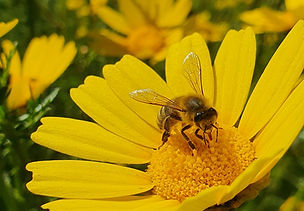
Native Bees and the True Picture of Pollinators
That is a critical distinction most people miss entirely. When the conversation turns to pollinators, the public focus almost always locks onto managed honeybees, completely overlooking our native bee species—like bumblebees, mason bees, leafcutter bees, and ground-nesting bees.
Unlike honeybees, which are managed livestock hauled around in commercial operations, native bees are wild, local, and uniquely adapted to pollinate specific native plants, wildflowers, and regional crops. When large-scale industrial mono-cropping, chemical use, or poorly planned developments tear up the landscape, it is the native bee populations that take the hardest hit—and they don't have a commercial beekeeper to truck in replacements.
Why It Matters for the Wild
If we want true land regeneration and a healthy ecosystem, we have to look past the superficial marketing and protect the entire web of native pollinators that keep our woods, fields, and food chain functioning. Real stewardship means recognizing every piece of the puzzle, learning as we go, and making commonsense choices that keep the land and our country strong.

"Honey bee pollinating wildflower - Outdoor Wild Conservation."

The Buzz of a Crisis: Why Our Pollinators are in
Peril
We often take for granted the tiny workers that keep our world in bloom. But right now, the honeybee is facing a fight for survival that stretches from the massive almond groves of California right to our own backyards.
The Almond Crisis
In the Central Valley of California, a tragedy unfolds every year. Billions of bees are trucked in to pollinate the almond crop—the backbone of the almond milk industry. Unfortunately, the combination of industrial pesticides, habitat loss, and the stress of transport leads to staggering die-offs. When we lose billions of bees for a single harvest, we aren't just losing insects; we are losing the very engine of our ecosystem.
Beyond the Trap: A Call for "Safety Zones"
It isn't just large-scale agriculture causing the problem. Many companies and homeowners still rely on "bee traps" filled with poisonous liquid. These traps are a dead end.
Instead of extermination, we should be looking at Safety Zones. Imagine a world where businesses don't reach for a spray bottle, but instead call a "Bee Collector"—a professional who can safely track, collect, and relocate the hive without harm. Moving toward live relocation and chemical-free zones is the only way to ensure the next generation sees a thriving wild.
What’s Next?
Stay tuned for an upcoming video segment where we’ll dive deeper into this, including some classic footage from our archives showing how we've been advocating for these little giants for years.
WILD CALL TO ACTION: Help Us Build a Safety Zone!
We are looking to connect with local beekeepers and "Bee Collectors" who specialize in live, non-lethal removals.
Do you know a local expert in Wisconsin (or beyond!) who uses bee vacs or relocation boxes instead of chemicals? We want to hear from you. Let’s build a directory for businesses and homeowners who want to save the bees rather than trap them. Drop a comment below or send us a note through our 'Field Notes' contact page!